


Tuesday, September 15th, 2026
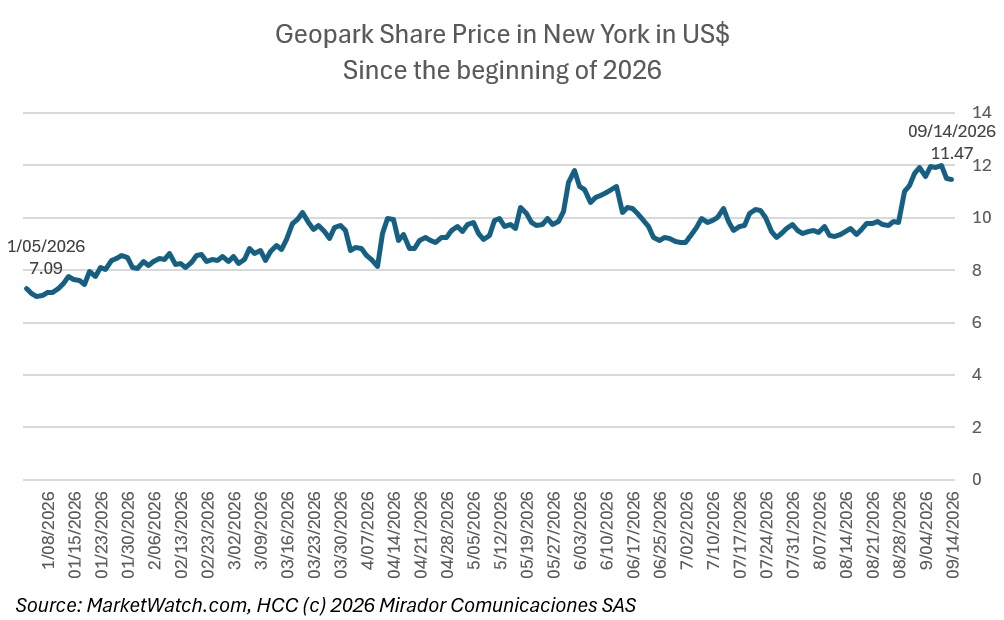
GeoPark is evaluating a dual listing that would let its shares trade in Colombia and eventually other markets, aiming to expand liquidity and access to new investors.
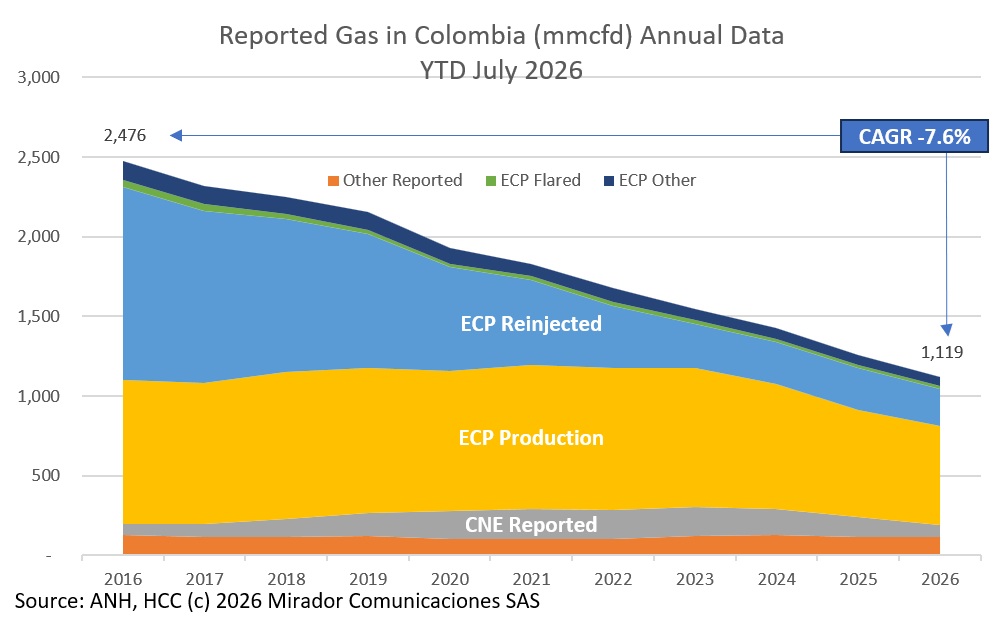
Some might hope that gas production improves since SPEC is reaching its capacity and no other LNG import facilities have come online. That’s not the case.

Enercer S.A. E.S.P. announced a natural gas service suspension Tuesday night across 11 municipalities in eastern Boyacá — Garagoa, Tenza, La Capilla, Sutatenza, Guateque, Miraflores, Zetaquira, Berbeo, Páez, San Eduardo, and Campohermoso.
Ariel Daniels De Andréis, governor of Taganga’s indigenous cabildo, directly disputed Ecopetrol’s characterization of the community’s prior-consultation demands for the Sirius gas project.
Ecopetrol shipped its first 2,100 tons of bulk solid sulfur from Reficar to international markets, marking the start of a monthly export cycle.
Ecopetrol and the UK Embassy awarded four Colombians — one from Cartagena, one from Barranquilla, and two from Bogotá — Chevening-Ecopetrol scholarships to pursue master’s degrees in energy transition, sustainability, and climate change at UK universities.
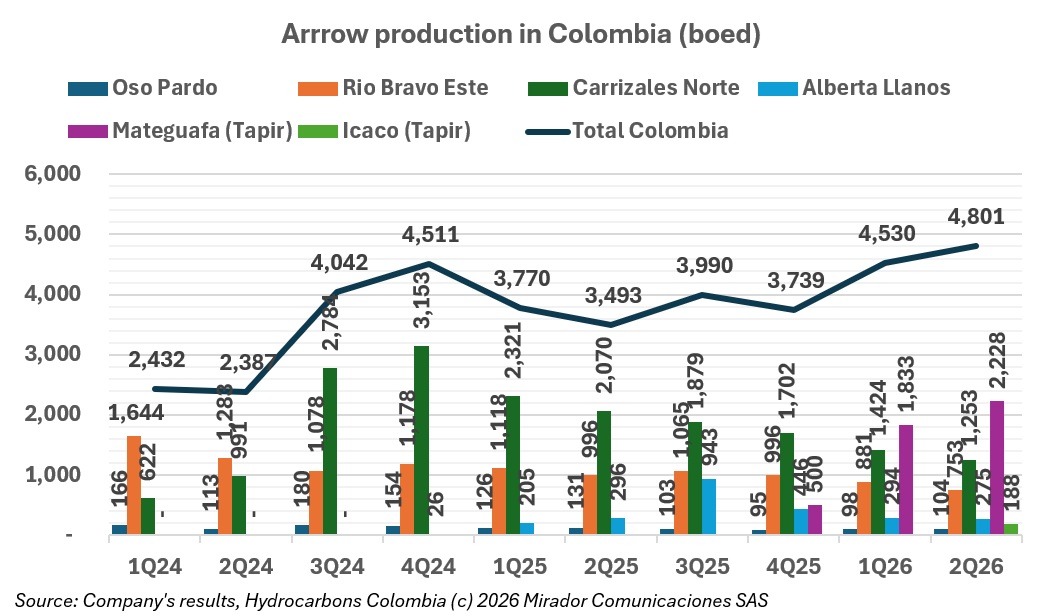
Arrow Exploration reported record total corporate production exceeding 6,000 boe/d — including newly acquired Thorsby field output in Alberta — driven by recent drilling successes, workover results, and the Thorsby acquisition.



2026, Hydrocarbons Colombia, All Rights Reserved.
