

Friday, October 16th, 2026
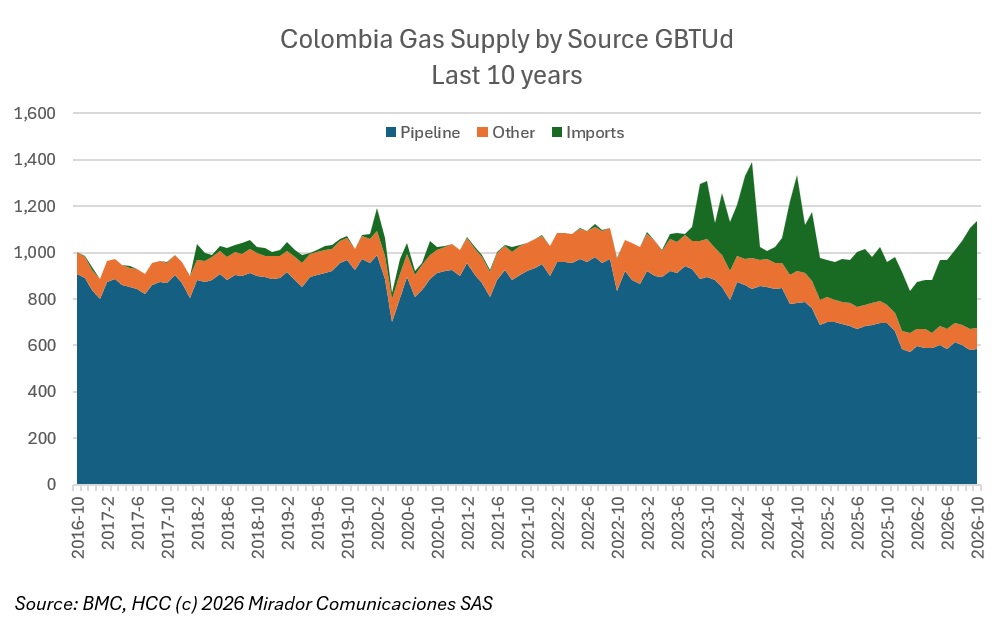
Colombia’s Mines and Energy Minister María Nohemí Arboleda says gas supply could fall short from February 2027 as domestic reserves shrink and imports grow.

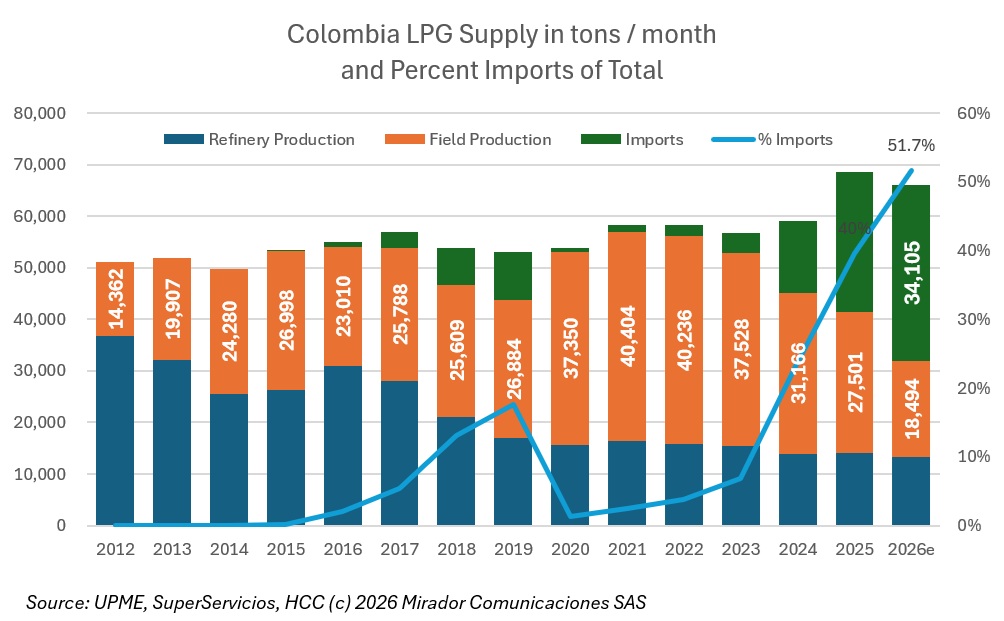
Colombia now imports more liquefied petroleum gas (LPG) than it produces, as industrial users switch away from scarce natural gas and domestic output declines.
Chile has no significant domestic gas production, yet its supply does not hinge on a floating regasification unit (FSRU), a contrast that shows how exposed Colombian industry is, argues Patricio Mura Escobar, general manager of Grupo GasPaís.
Luis Felipe Henao, an independent member of Ecopetrol’s board, has filed a complaint for aggravated insult and slander against Alberto Vergara Monterrosa, the company’s former compliance chief.
The mining and energy sector’s share of Colombia’s corporate income tax fell from 36.2% in 2012 to 6.3% in 2025, according to figures presented at an ANIF–CREE seminar titled “Energy to return to growth.”
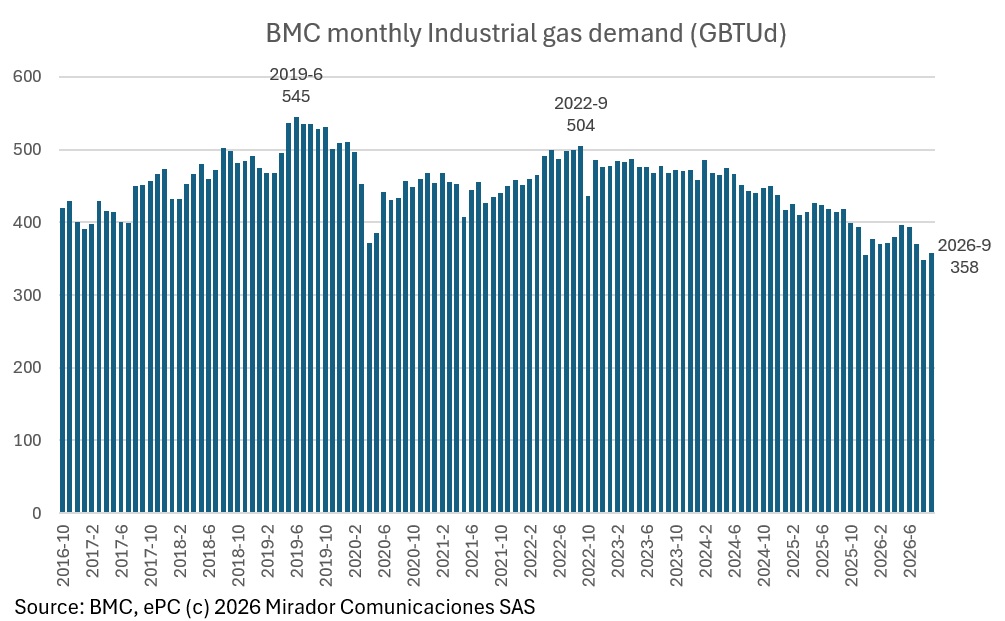
Imported gas supplied 39% of Colombia’s natural gas in September, and with a very strong El Niño looming, industrial users are looking for alternatives to secure their energy.
The floating storage unit that will supply Colombia’s Pacific regasification project has arrived in Buenaventura Bay, and large companies are reportedly weighing bids for the venture.



2026, Hydrocarbons Colombia, All Rights Reserved.
