


Tuesday, October 20th, 2026
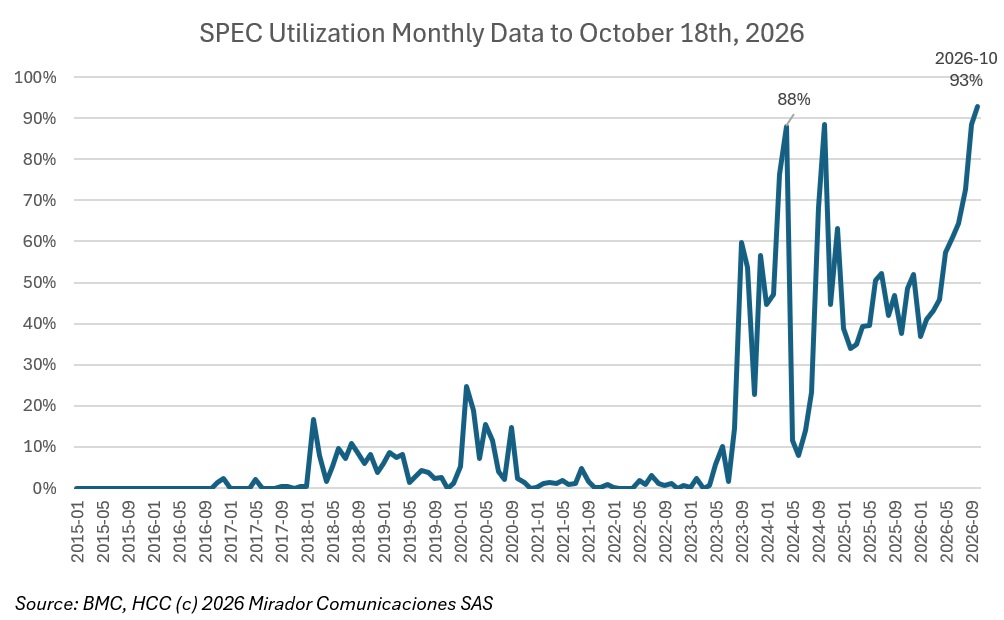
The SPEC LNG terminal in Cartagena is set to add 58 mmcfd of regasification capacity within days, taking it to 533 mmcfd. That would be the country’s only LNG import gateway running at a higher ceiling just as demand pressure builds.
Last week, Colombian President Abelardo de la Espriella signed Directive 06, by which his government hopes to expedite the prior consultation process especially for high-priority energy projects like Sirius. Here we go deeper into the detail. Somehow, this all sounds terribly familiar.
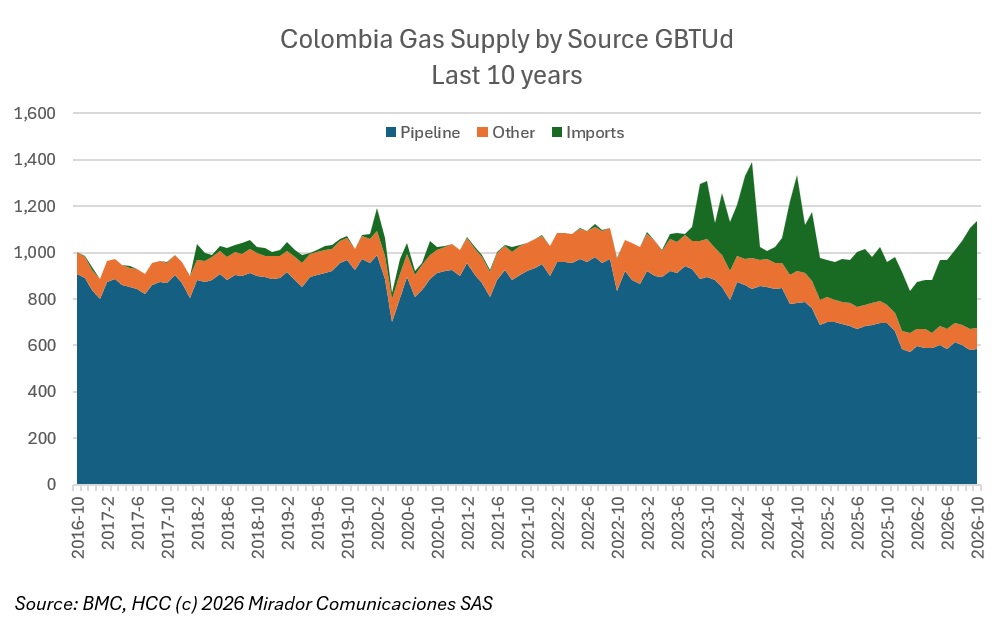
Colombia’s Mines and Energy Minister María Nohemí Arboleda says gas supply could fall short from February 2027 as domestic reserves shrink and imports grow.
President Abelardo de la Espriella has issued a directive that reshapes how Colombia handles prior consultation with ethnic communities, replacing three earlier presidential directives.
Boston Consulting Group (BCG) warns that most of the industry’s largest producers face shrinking volumes over the next 15 years.
Citi has kept Ecopetrol at Neutral with an unchanged US$18 per ADR target, calling the appointment of Joaquín Gutiérrez as president a missed chance to signal independent governance.
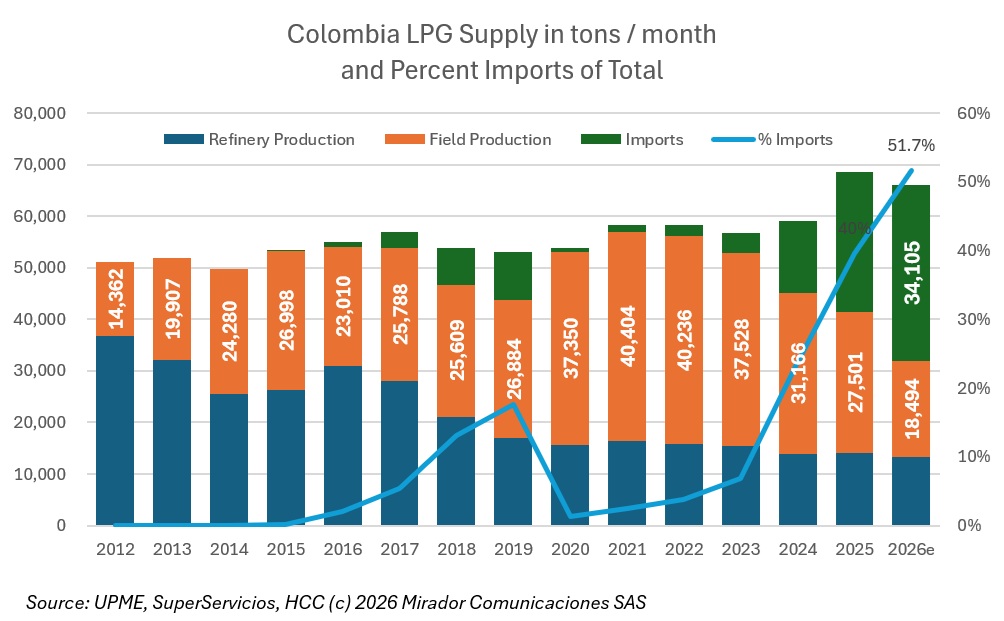
Colombia now imports more liquefied petroleum gas (LPG) than it produces, as industrial users switch away from scarce natural gas and domestic output declines.



2026, Hydrocarbons Colombia, All Rights Reserved.
