

Tuesday, September 29th, 2026
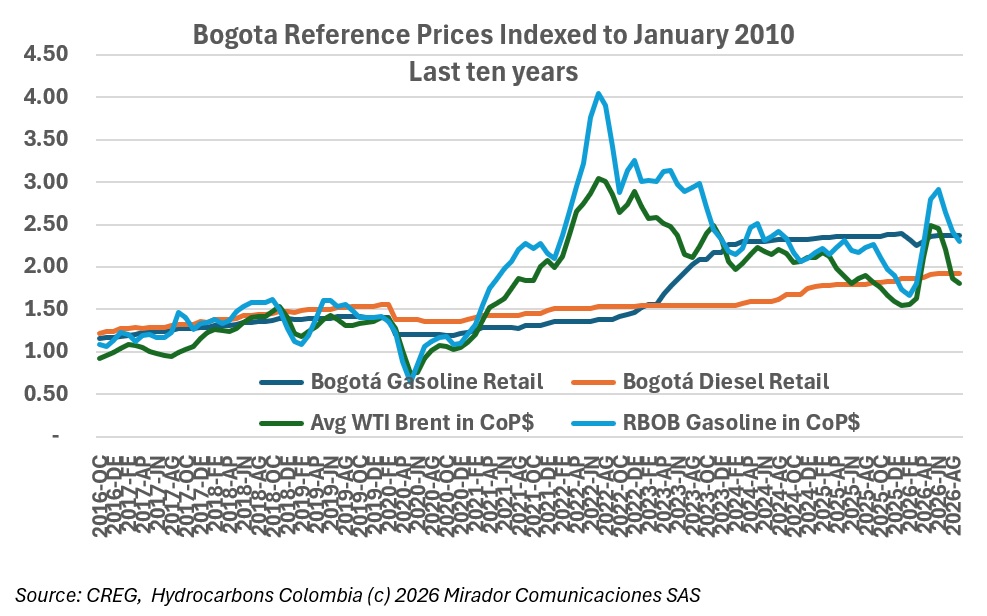
Vice Minister of Energy Armando Cuello said the government has not ruled out eventually raising diesel prices, arguing the current subsidy is unsustainable.

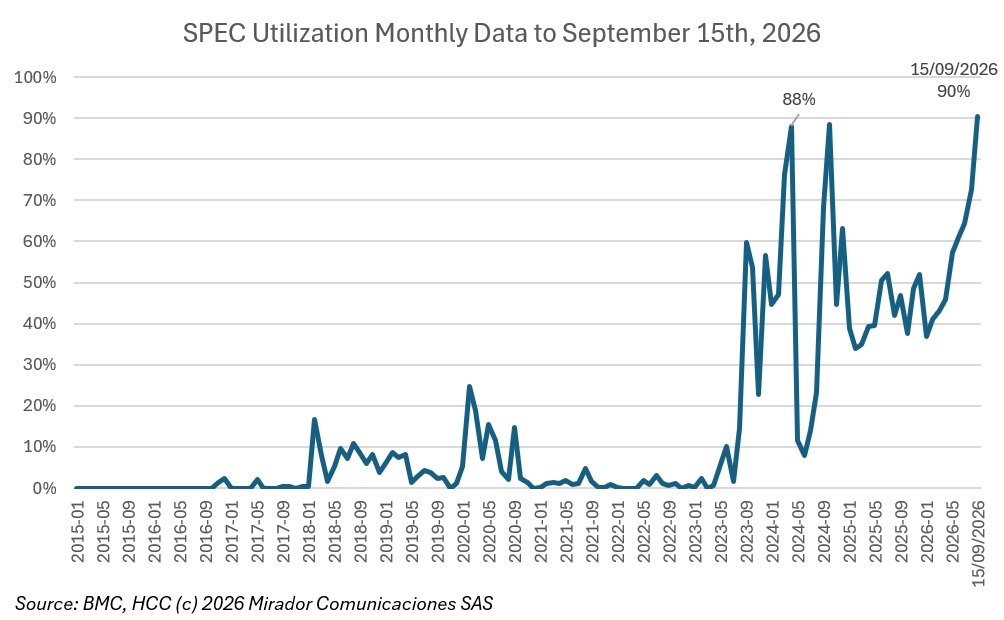
A malfunction in one of the floating regasification unit’s trains at the SPEC terminal in Cartagena forced Colombia into temporary industrial gas rationing starting September 24th, cutting the terminal’s capacity from 475 to 400 mmcfd and restricting roughly 15 GBTU/day of demand normally covered by imported gas.
Ecopetrol’s newly renewed board unanimously confirmed Joaquín Gutiérrez Caballero as president without using an external headhunter, opting instead to run the search itself following the board’s complete September 15th renewal.
New Ecopetrol president Joaquín Gutiérrez Caballero used his swearing-in at La Quinta de San Pedro Alejandrino in Santa Marta to announce that the company will resume both fracking and offshore exploration.
Facing a fiscal deficit CARF projects could reach 10% of GDP by the close of 2027 and net debt around 67.3% of GDP, former Finance Minister Mauricio Cárdenas told Blu Radio that selling Ecopetrol’s majority stake in ISA to Colombia’s pension funds would be a smart move.
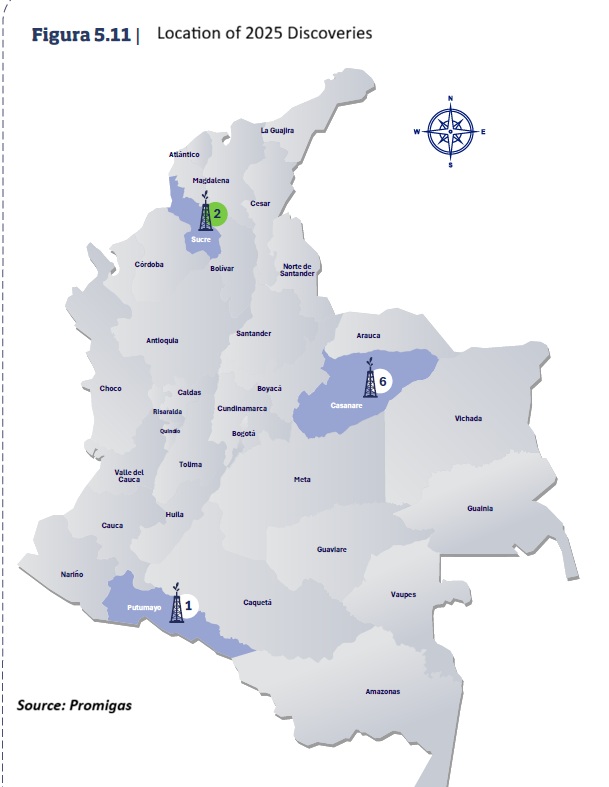
Promigas’s 27th annual natural gas sector report frames 2026 around a single organizing idea: energy security. Colombia has moved from being self-sufficient in gas to permanently import-dependent, and the document argues the country’s real vulnerability is no longer whether molecules exist somewhere in global markets, but whether Colombia has the local capacity to contract, finance, transport, and operate them reliably under stress.
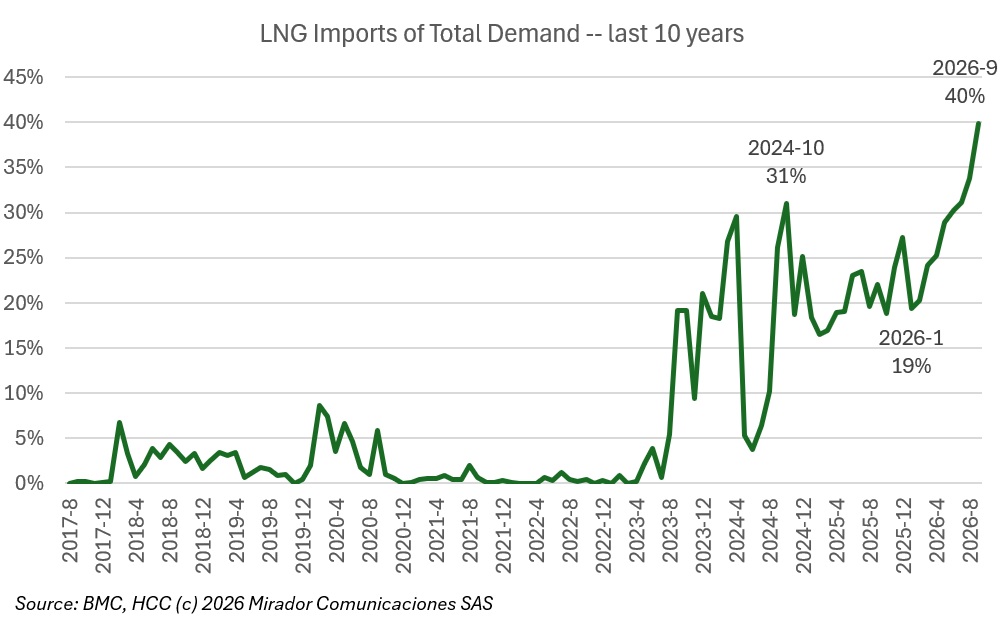
Óscar Rincón, president of the Asociación Colombiana de Ingenieros de Petróleos (Acipet), projected gas imports could reach 35-40% of national consumption by the end of 2026 as El Niño pushes thermal plants toward near-full dispatch capacity.



2026, Hydrocarbons Colombia, All Rights Reserved.
