

Wednesday, September 23rd, 2026
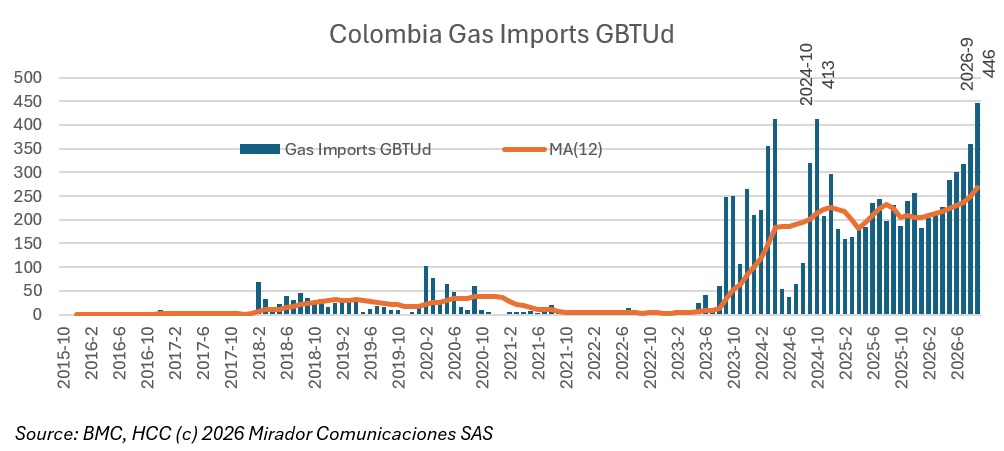
Colombia’s gas imports have surpassed the volumes seen during the 2023-2024 El Niño, with Acipet projecting imports could represent roughly 40% of national gas supply by year-end 2026.

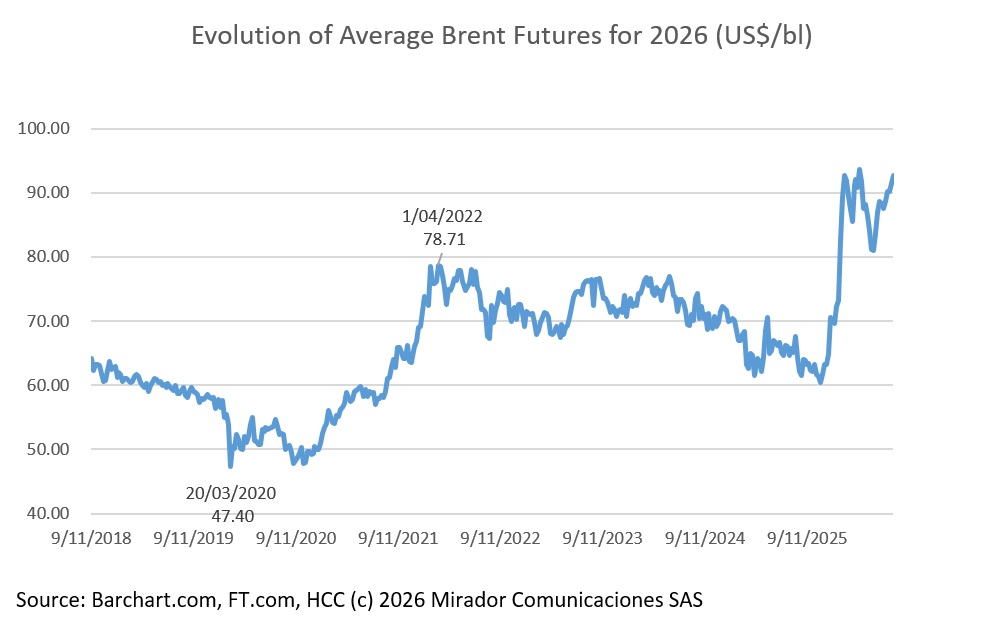
Brent crude climbed above US$100 a barrel last week — closing at US$108.61 on last Tuesday, its highest level since May. Brent closed Monday, September 21st at US$100.39.
Vice President José Manuel Restrepo said Colombia’s bilateral agenda with the United States includes discussion of energy interconnection with Venezuela, specifically referencing the Antonio Ricaurte pipeline in northern Colombia as a potential route for importing gas from the country holding the world’s largest reserves.
At Ecopetrol’s September 15 Extraordinary Shareholders Assembly, former senator and minority shareholder Jorge Enrique Robledo challenged President Abelardo De la Espriella’s economic vision for the company, calling it characteristic of “neoliberalism” and warning against treating national and foreign capital as equivalent in company decisions.
Graford Santamaría Valbuena, currently Ecopetrol’s hydrocarbons financial director, was named the company’s new commercial and marketing vice president, taking over after Julio César Herrera Martínez’s mutually agreed departure from the role.
I was and then I wasn’t going to use this biweekly opinion piece to comment on desirable qualities of the new CEO of Ecopetrol. I had decided there was a high risk of publishing just as ECP announced Joaquín Gutiérrez’s appointment. But five days after the board, the NOC has made no announcement and then I saw a relevant editorial in El Heraldo.
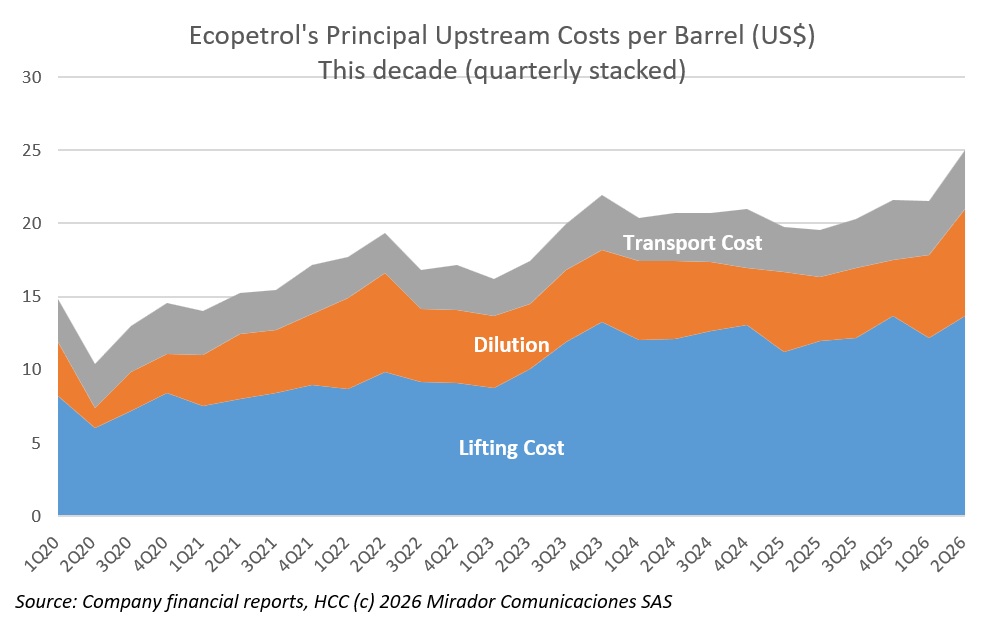
Ecopetrol will implement a company-wide austerity plan for 2027 following Ricardo Roa and Juan Carlos Hurtado’s departures and the board turnover, covering project studies and design, professional services and contracting, and travel expenses.



2026, Hydrocarbons Colombia, All Rights Reserved.
