

Tuesday, October 27th, 2026
Source: Gasnova, HCC © 2026 Mirador Comunicaciones SAS
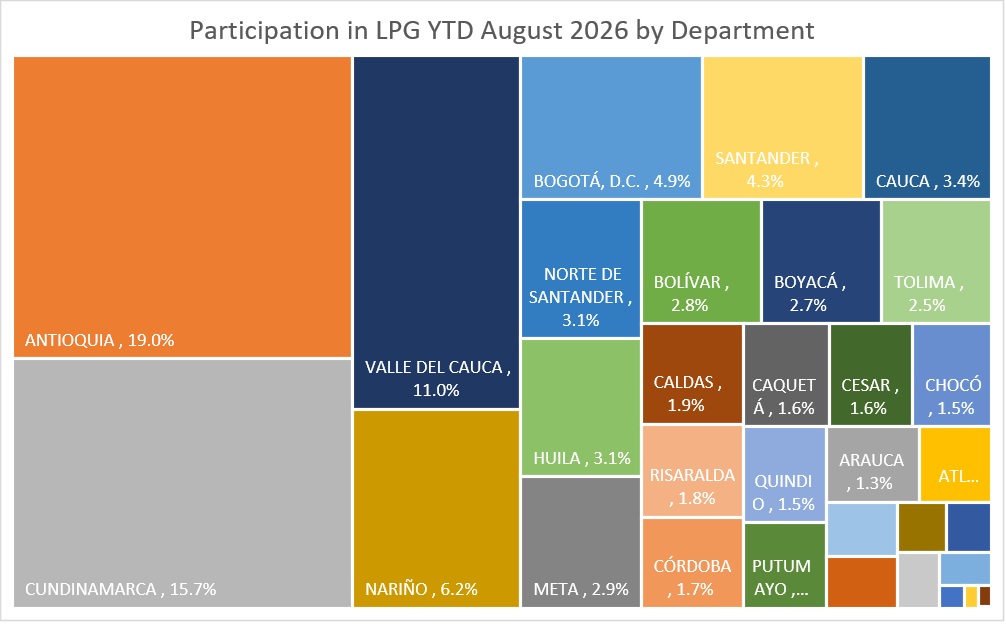
Colombia’s LPG consumption is concentrated in Antioquia, Cundinamarca and Valle del Cauca, and the LPG association Gasnova warns of a possible supply deficit.

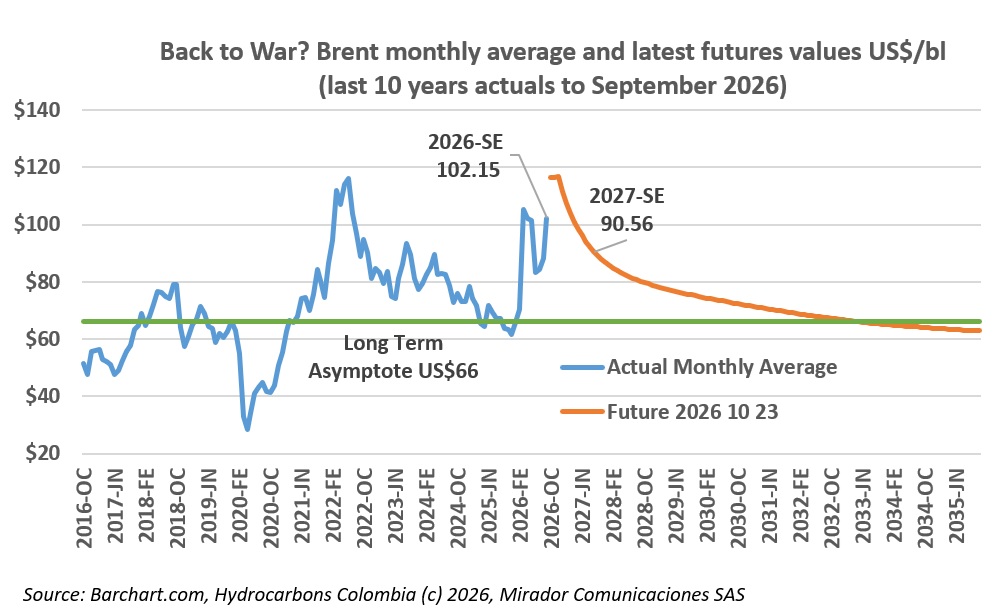
Brent closed at US$116.58 per barrel last Friday, October 23rd, and as we write on Monday, it closed at US$115.13, today having been back to US$117.11 and as low as US$114.21. Exactly one year ago, Brent’s Friday close was US$65.69 and we wrote about how E&Ps might react if it fell further.
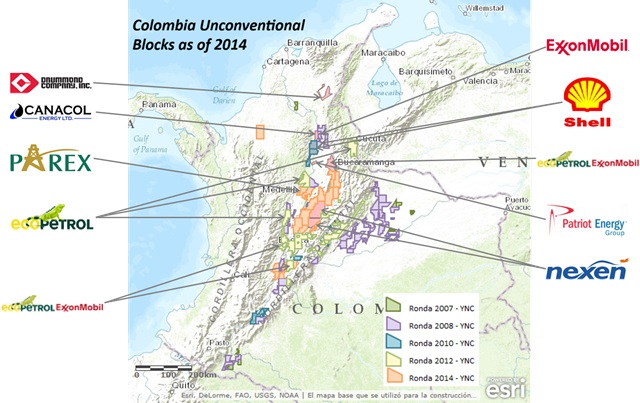
Campetrol, the oil, gas and energy chamber, has proposed measures to strengthen Colombia’s oil and gas sector, including more output from existing fields, onshore and Caribbean development, and expanded exploration.
Four industry associations have asked the government to eliminate the income-tax surcharge on oil extraction in its Rescue Law and to set stable rules for large investments.
Fitch Ratings has affirmed Ecopetrol’s top national rating but forecasts that its 2026 production will fall 3%, to 724,000 boepd, on lower gas output.
Fuel rose from 28% to 38% of Latin American airlines’ operating costs in a year, ALTA chief executive Peter Cerdá said, with total fuel spending up about 80%.
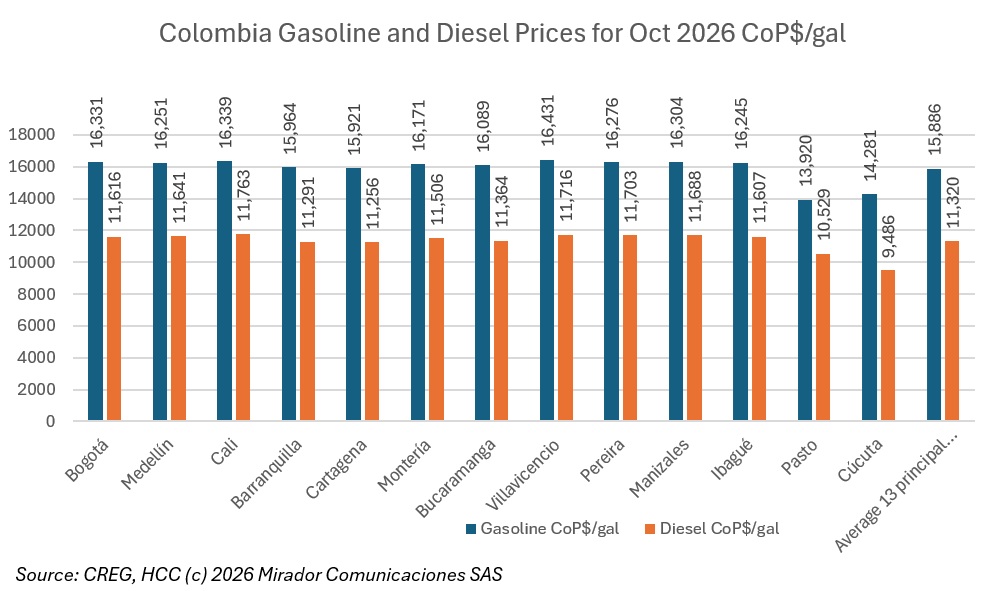
Gasoline reference prices range from CoP$13,920 per gallon in Pasto to CoP$16,431 in Villavicencio under the October fuel schedule, while diesel runs from CoP$9,486 in Cúcuta to CoP$11,763 in Cali.



2026, Hydrocarbons Colombia, All Rights Reserved.
