


Wednesday, September 2nd, 2026
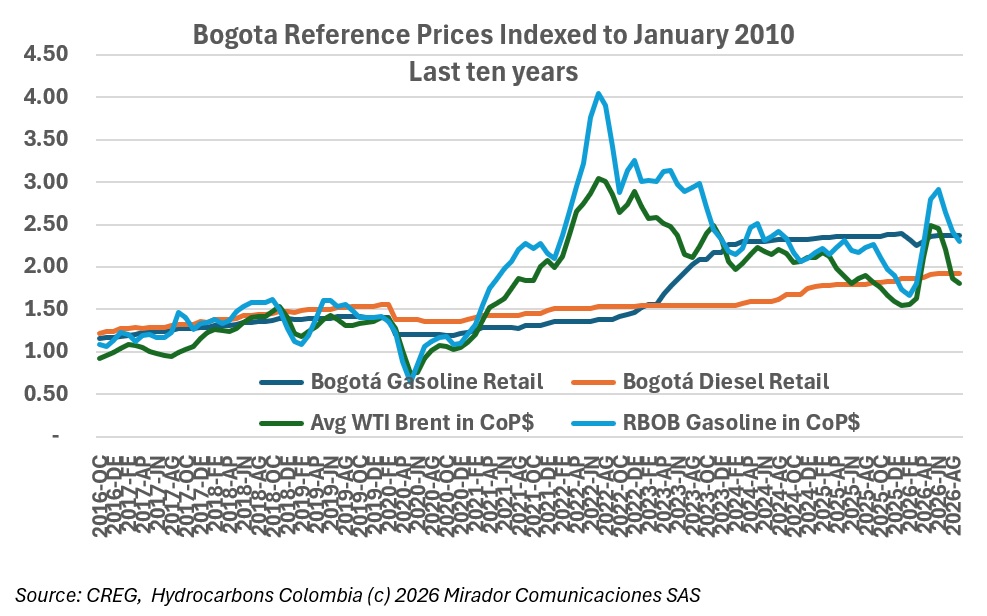
Gasoline and diesel prices held flat in 13 of Colombia’s principal cities, including Bogotá, Cali, Barranquilla, Cartagena, Montería, and Villavicencio, when comparing rates from August 1 and August 26, 2026, though the national average edged slightly lower over that window.
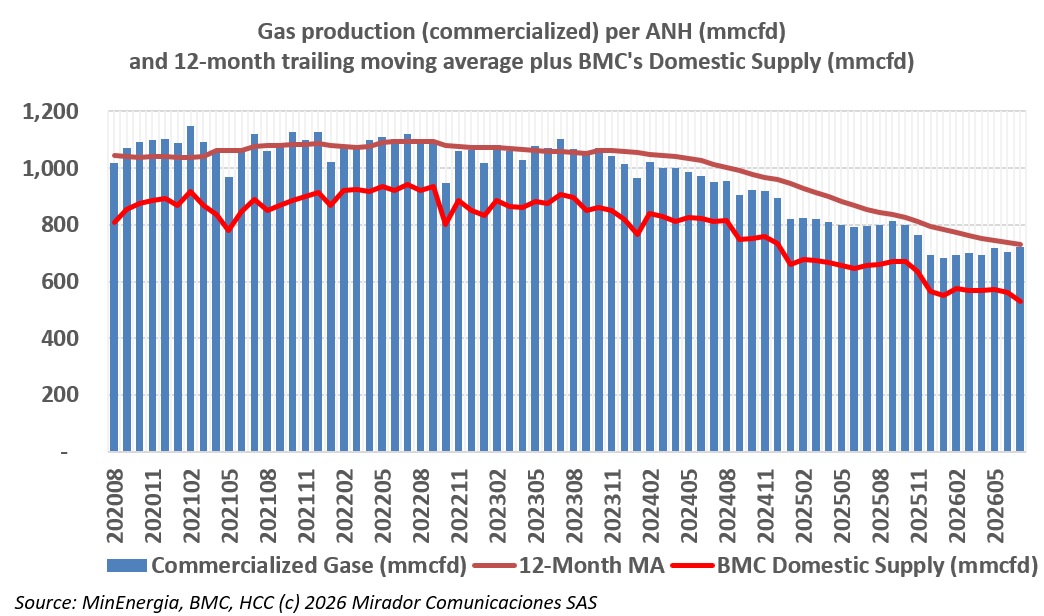
Colombia’s reported natural gas production fell 8.36% year-on-year in July 2026, from 1,196 mmcfd to 1,096 mmcfd, extending a decline that has held in every month of 2026 so far.
President Abelardo De la Espriella’s government named Ernesto Francisco Forero Fernández de Castro as president of the Agencia Nacional de Hidrocarburos (ANH) via Decreto 1189, dated August 12, one of four appointments across the sector’s key technical entities.
BTG Pactual maintains a Neutral rating on Ecopetrol, with a 12-month price target of US$14.5 against the US$17.53 the stock traded at when the report published, implying a 17.3% potential decline, partially offset by an expected 5.1% dividend yield, for an estimated total return of -12.2%.
The six governors of Colombia’s oil-producing departments – Arauca, Boyacá, Casanare, Huila, Meta, and Santander – formally ratified Ricardo Rodríguez Yee as their nominee for the board’s eighth seat, filing a letter with the Finance Ministry on August 26.
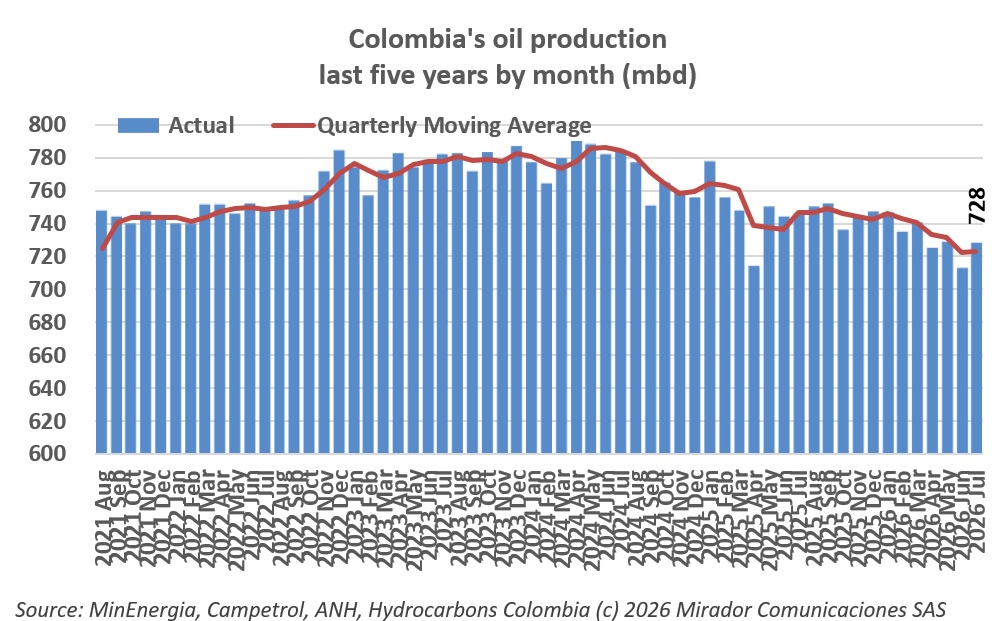
Colombia’s oil production fell 2.46% year-on-year in July 2026, from 746,242 bd to 727,920 bd, marking the third consecutive monthly year-on-year decline since May — and every month of 2026 except April has posted a decline.
Vanti president Rodolfo Anaya said the Sandía gas discovery, located in the Caribbean near the Sirius field, could double Colombia’s gas reserves once official reports from operators Ecopetrol and Petrobras confirm its scale — a potentially pivotal find given the country’s ongoing loss of energy self-sufficiency.



2026, Hydrocarbons Colombia, All Rights Reserved.
