

Tuesday, September 1st, 2026
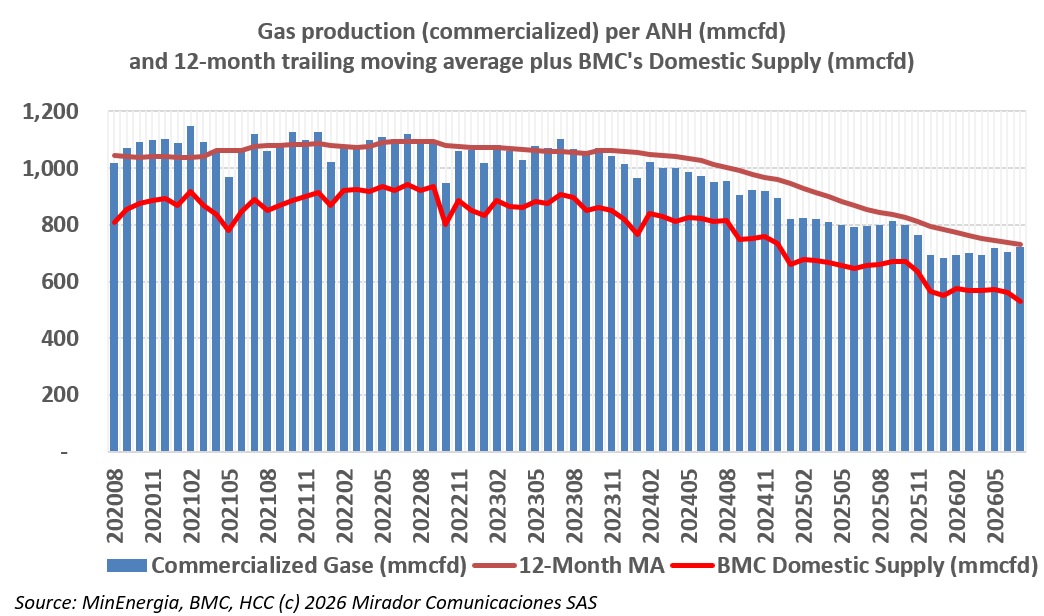
Colombia’s reported natural gas production fell 8.36% year-on-year in July 2026, from 1,196 mmcfd to 1,096 mmcfd, extending a decline that has held in every month of 2026 so far.

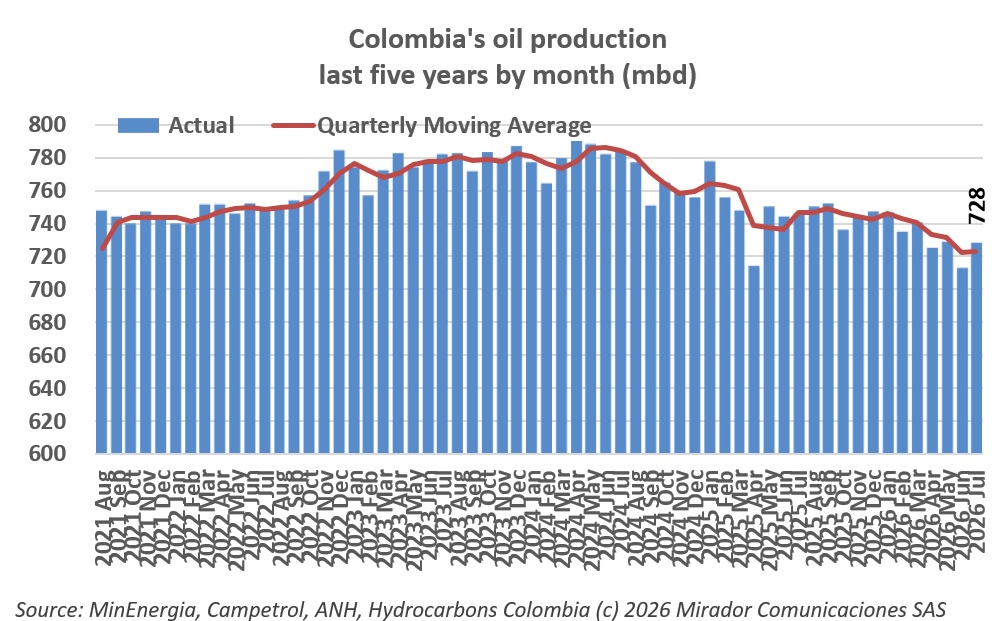
Colombia’s oil production fell 2.46% year-on-year in July 2026, from 746,242 bd to 727,920 bd, marking the third consecutive monthly year-on-year decline since May — and every month of 2026 except April has posted a decline.
Vanti president Rodolfo Anaya said the Sandía gas discovery, located in the Caribbean near the Sirius field, could double Colombia’s gas reserves once official reports from operators Ecopetrol and Petrobras confirm its scale — a potentially pivotal find given the country’s ongoing loss of energy self-sufficiency.
Ecopetrol’s board of directors approved the departure of five senior executives on August 27th, effective August 31th, with each position filled on an interim basis while the company defines permanent appointments.
President Abelardo De la Espriella’s government has finalized the single slate of nominees it will present at Ecopetrol’s extraordinary shareholders’ assembly on September 15, aimed at renewing the company’s board of directors.
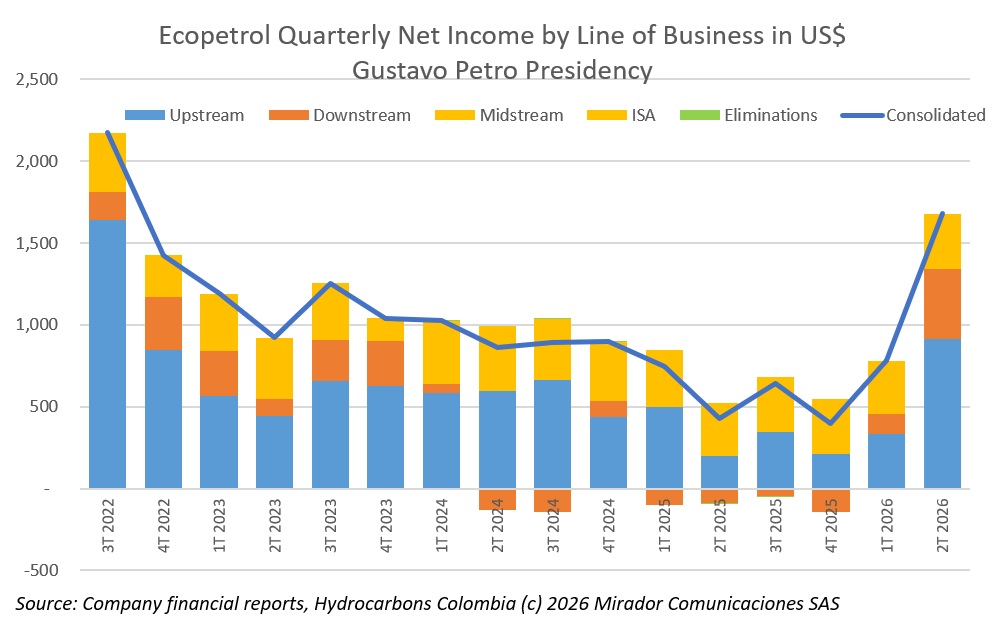
Technically it’s over. Practically speaking, it isn’t. Gustavo Petro was still president of Colombia in July and his temporary substitute for Ricardo Roa will be there until the end of the third quarter. Even if he leaves directly after the board meeting at the end of September, he will have been in charge for virtually all of the quarter.
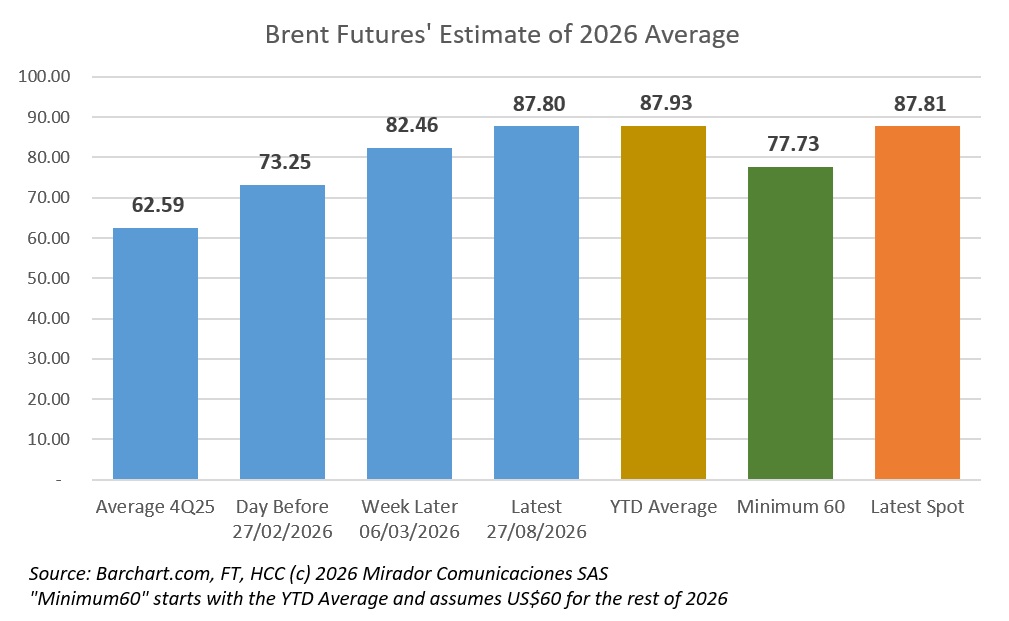
The US and Iran are no closer to a solution to the Strait of Hormuz but the situation may becoming to a sustainable stalemate and that, in turn, may be stabilizing Brent – but only in a medium-to-long term sense.



2026, Hydrocarbons Colombia, All Rights Reserved.
