


Monday, October 12th, 2026
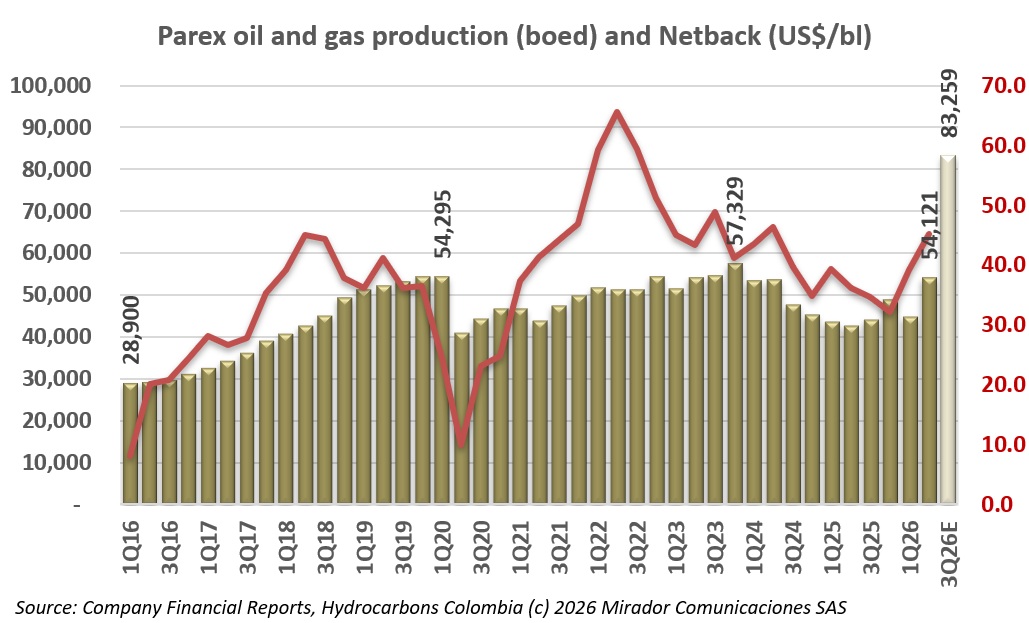
Parex Resources said preliminary 3Q26 production averaged 83,259 boe/d, with output edging up through the quarter.
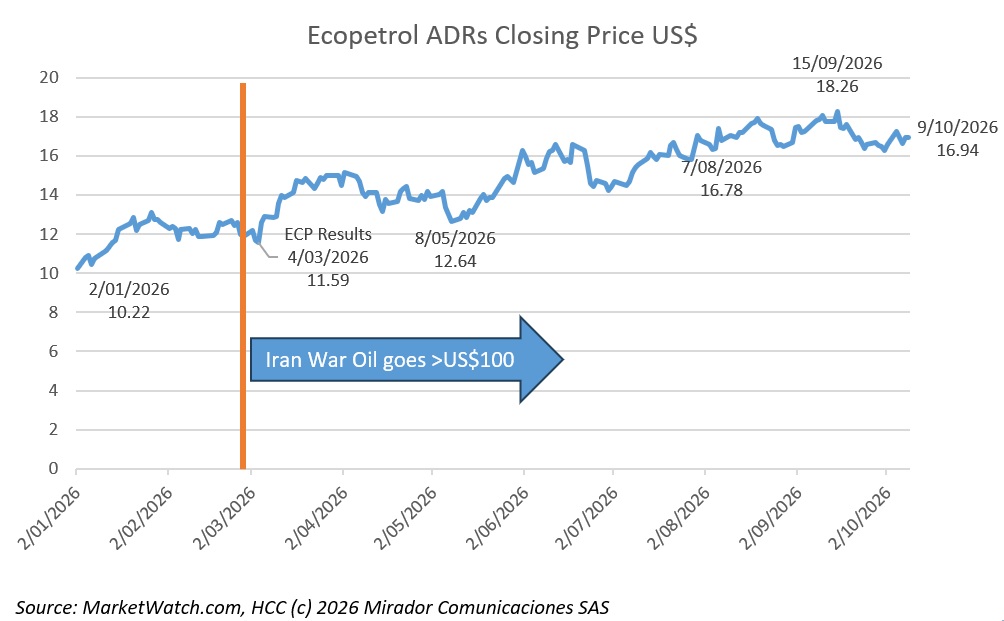
The lead graph shows the price of Ecopetrol’s ADR’s (Symbol: EC) from January 1st, up nearly 70% from the start of the year. But then oil prices are up, “thanks” to the Iran War, now a wider Middle East conflict and a favorable change in government.
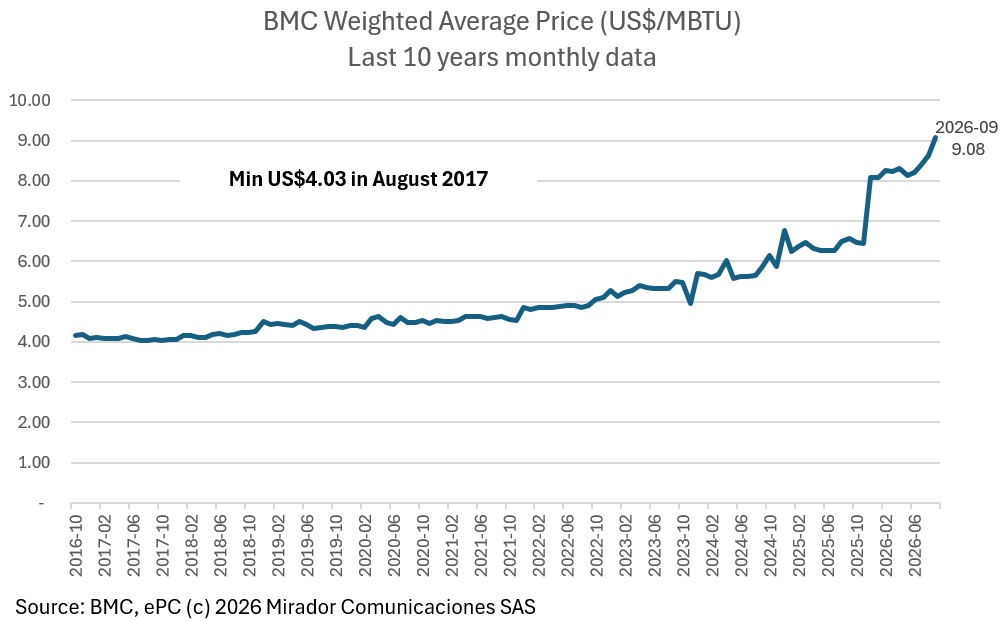
This should come as a surprise to no one: as domestic production falls, the supply mix shifts to imported gas at more than twice the price of domestic. The average inevitably has to go up.
Colombia’s hydrocarbons agency (ANH) says it will work directly with operators to remove the obstacles that limit new gas volumes reaching the market in the short and medium term.
Colombia’s environmental licensing authority (ANLA) has granted Ecopetrol an environmental license for the Bucare development area in Acacías, Meta, moving the project toward its production stage.
A global shortage of floating regasification vessels is raising costs and delaying the LNG import projects Colombia is counting on as its domestic gas declines.
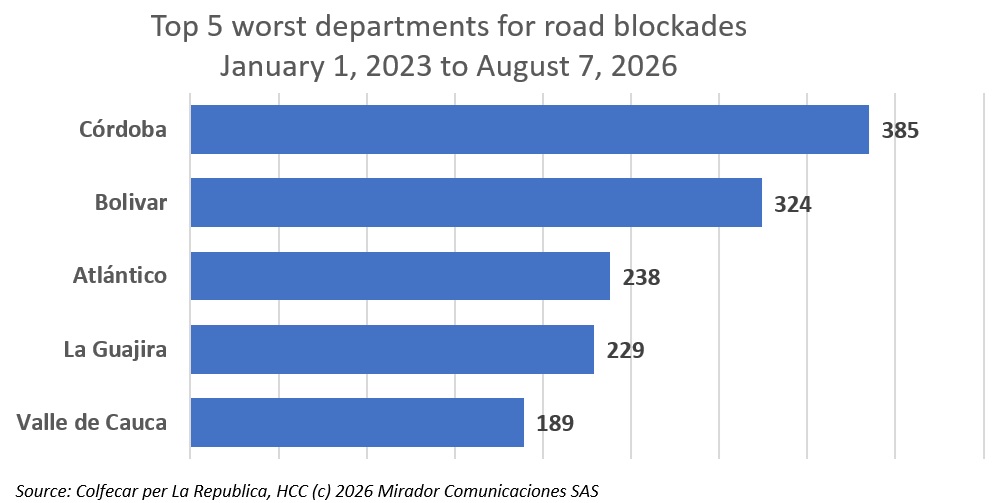
Road blockades have cost Colombia’s cargo transport sector CoP$12.9T since 2023, according to the federation’s own count of 2,841 between January 1, 2023 and August 7, 2026.



2026, Hydrocarbons Colombia, All Rights Reserved.
