

Monday, August 31st, 2026
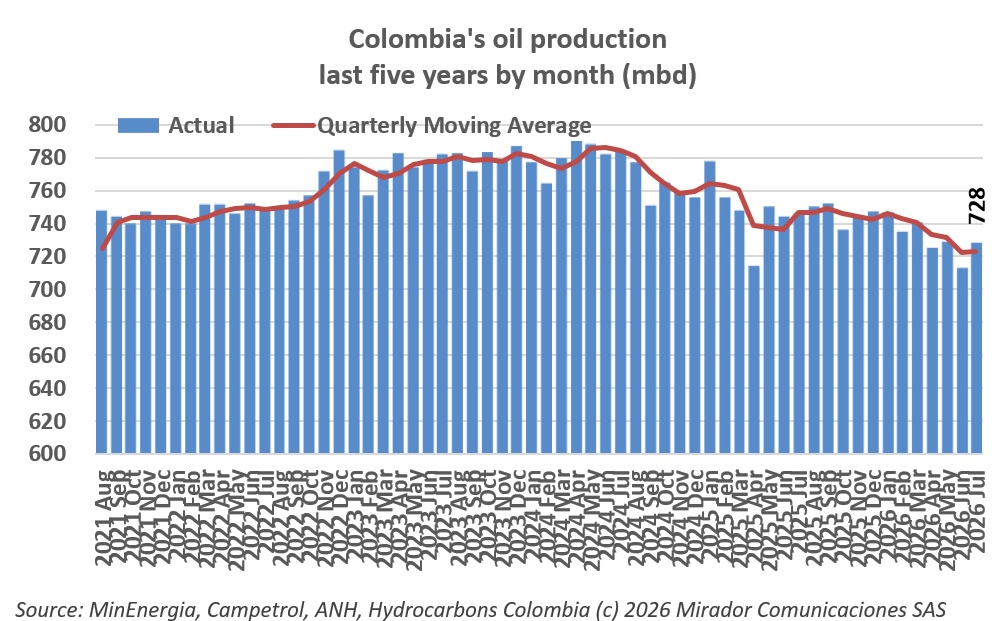
Colombia’s oil production fell 2.46% year-on-year in July 2026, from 746,242 bd to 727,920 bd, marking the third consecutive monthly year-on-year decline since May — and every month of 2026 except April has posted a decline.

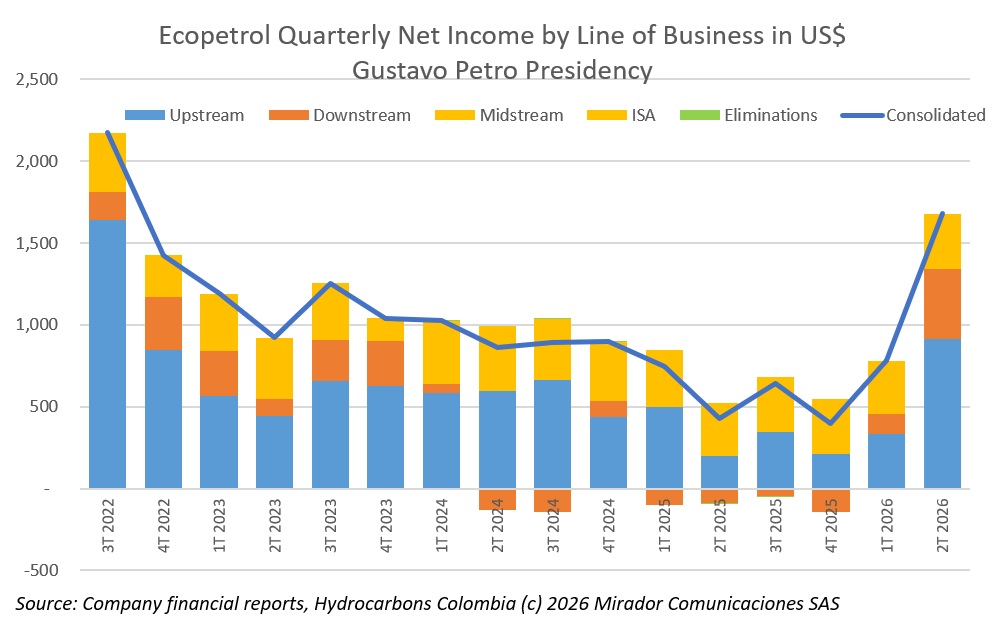
Technically it’s over. Practically speaking, it isn’t. Gustavo Petro was still president of Colombia in July and his temporary substitute for Ricardo Roa will be there until the end of the third quarter. Even if he leaves directly after the board meeting at the end of September, he will have been in charge for virtually all of the quarter.
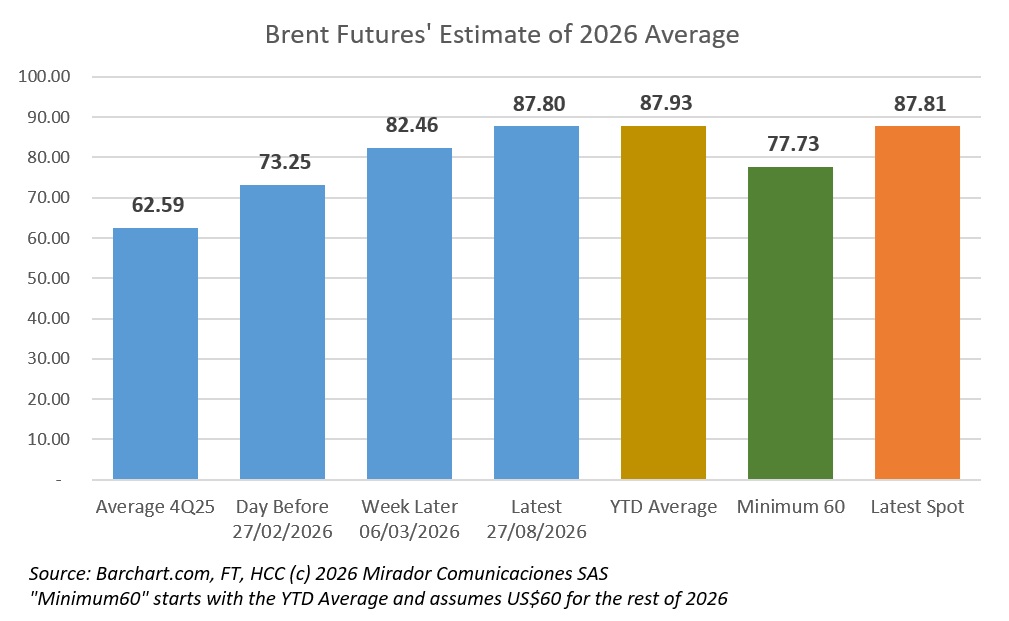
The US and Iran are no closer to a solution to the Strait of Hormuz but the situation may becoming to a sustainable stalemate and that, in turn, may be stabilizing Brent – but only in a medium-to-long term sense.
Drummond Energy is abandoning its planned regasification terminal in Ciénaga, Magdalena, to focus entirely on developing unconventional shale gas in Cesar, betting on President Abelardo De la Espriella’s fracking-friendly stance.
Colombia’s unconventional hydrocarbons (YNC) could extend national gas self-sufficiency by roughly 70 years and oil self-sufficiency by nearly 16 years, relative to 2020 production levels, according to a Corficolombiana report.
Ecopetrol’s Barranquilla and Cartagena refineries strengthened their fuel and petrochemical output in the first half of 2026, with total refining throughput averaging 428,000 bd, up 5.9% (24,000 bd) year-on-year.
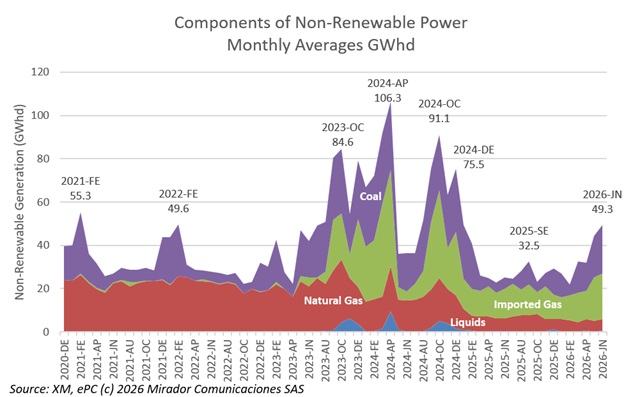
Colombia’s electricity demand is projected to grow roughly 10% between 2026 and 2030, according to UPME estimates cited at Andeg’s 13th Energy Forum, straining both generation supply and the transmission network.



2026, Hydrocarbons Colombia, All Rights Reserved.
