

Thursday, October 22nd, 2026
Campetrol, the oil, gas and energy chamber, has proposed measures to strengthen Colombia’s oil and gas sector, including more output from existing fields, onshore and Caribbean development, and expanded exploration.

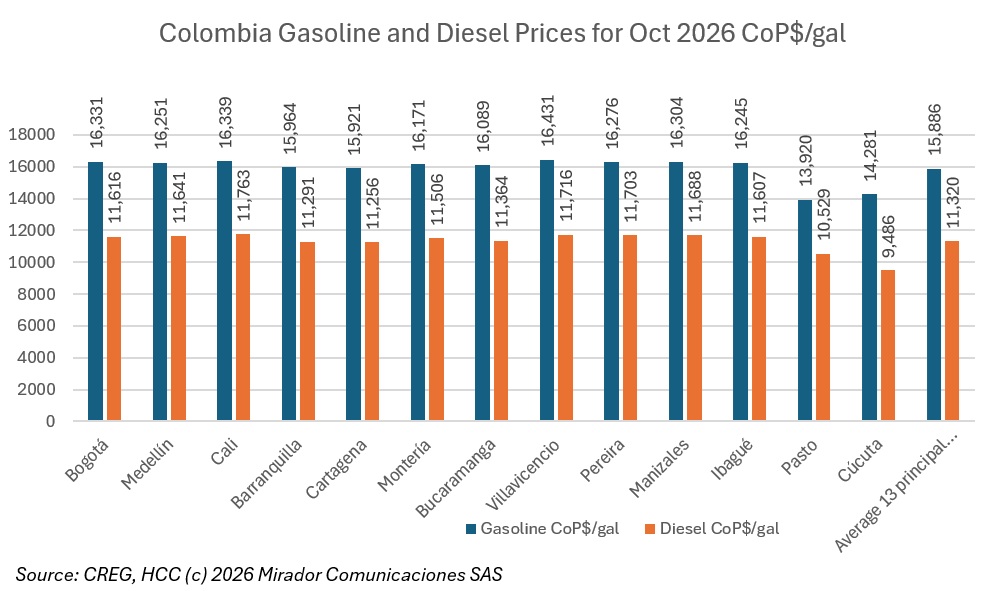
Gasoline reference prices range from CoP$13,920 per gallon in Pasto to CoP$16,431 in Villavicencio under the October fuel schedule, while diesel runs from CoP$9,486 in Cúcuta to CoP$11,763 in Cali.
Analysts warn that Ecopetrol’s decision to void its offers to buy imported gas could leave Colombia’s two new regasification terminals without supply and widen the gas deficit by March 2027.
Naturgas president Luz Stella Murgas says Colombia’s national production can no longer cover total gas demand and that imports should continue as a reliability mechanism while exploration bottlenecks are cleared.
Gases del Caribe, the gas distributor for much of Colombia’s Caribbean region, has marked 60 years in business with more than 1.3 million users in Atlántico, Magdalena and Cesar.
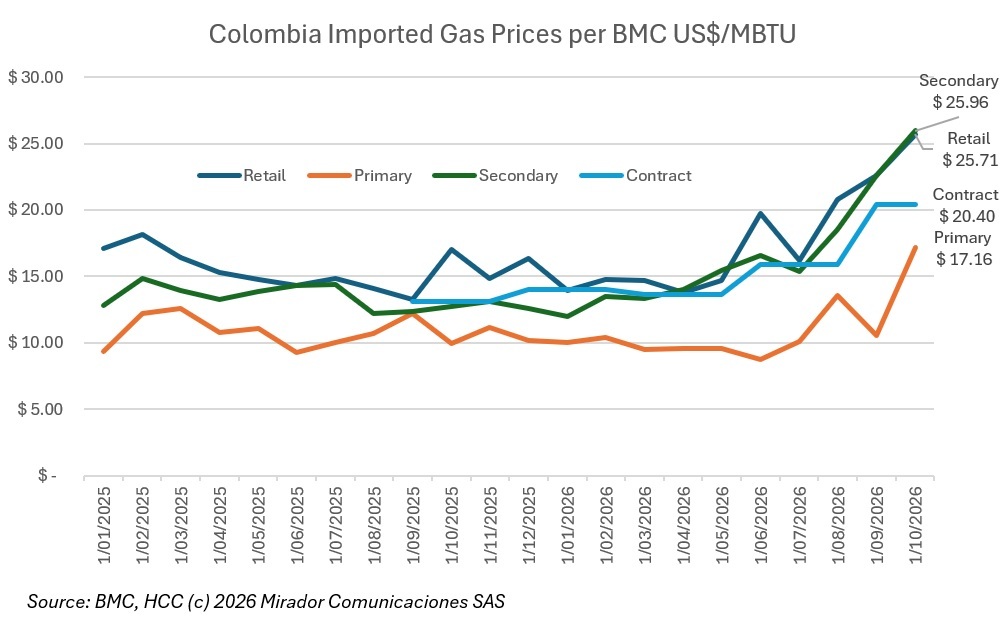
SPEC, the terminal that handles all of Colombia’s LNG imports, is running at its limit, and one energy analyst warns that without new regasification capacity the country could face a gas deficit of 124 mmcfd in March 2027.
GeoPark’s average oil and gas production rose 2.6% from 2Q26 to 27,973 boepd in 3Q26, and the company says its Venezuela expansion is advancing.



2026, Hydrocarbons Colombia, All Rights Reserved.
