

Thursday, April 16th, 2026
Colombia’s energy and gas regulator CREG has opened a regulatory sandbox pilot to test potential changes to the liquefied petroleum gas (LPG) market before committing to permanent regulatory amendments.

Colombia’s March 2026 inflation reading came in at 5.56%, marking the second consecutive monthly increase since February, but the energy components of the basket told a contrasting story of deceleration rather than acceleration.
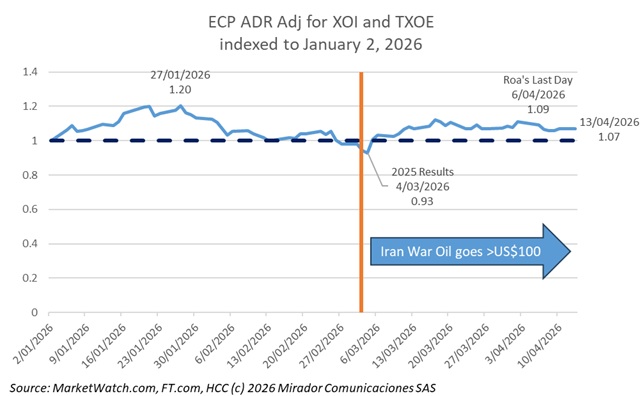
Ecopetrol’s share price has staged a striking recovery — up roughly 20% through March on the back of Brent crude surging past US$100/bbl from sub-US$70 levels before the Middle East conflict — but a convergence of analyst commentary, market data and reputational indices paints a more troubling picture of the state of Colombia’s state oil company.
In a wide-ranging interview, Luz Stella Murgas, president of the Asociación Colombiana de Gas Natural (Naturgas), delivered a clear-eyed assessment of Colombia’s gas supply crisis that cuts against the government’s preferred framing: the country’s problem is not a shortage of gas in the ground but a persistent failure to build the political and institutional consensus needed to get it out.
With Colombia now a net gas importer and conventional production in sustained decline, energy sector voices are pushing hydraulic fracturing back onto the national agenda as the most credible lever for reversing the country’s hydrocarbon trajectory.
Ecopetrol’s acting president Juan Carlos Hurtado signaled in a press conference that the company is actively reviewing whether to revise its investment plan upward in response to the sharp rise in international crude prices triggered by the US-Israel conflict with Iran.
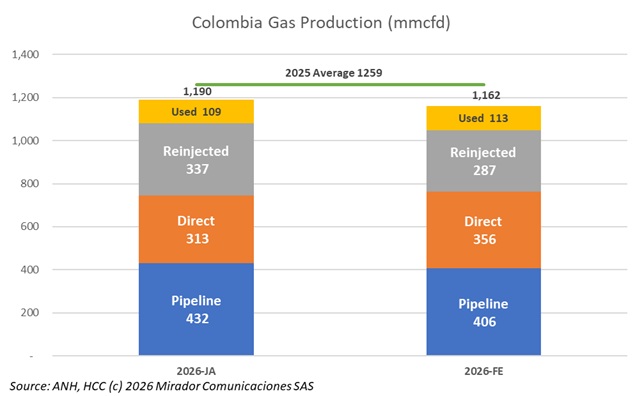
The ANH published gas production for January and February 2026 and the story has worsened yet again.



2026, Hydrocarbons Colombia, All Rights Reserved.
