


Wednesday, October 21st, 2026
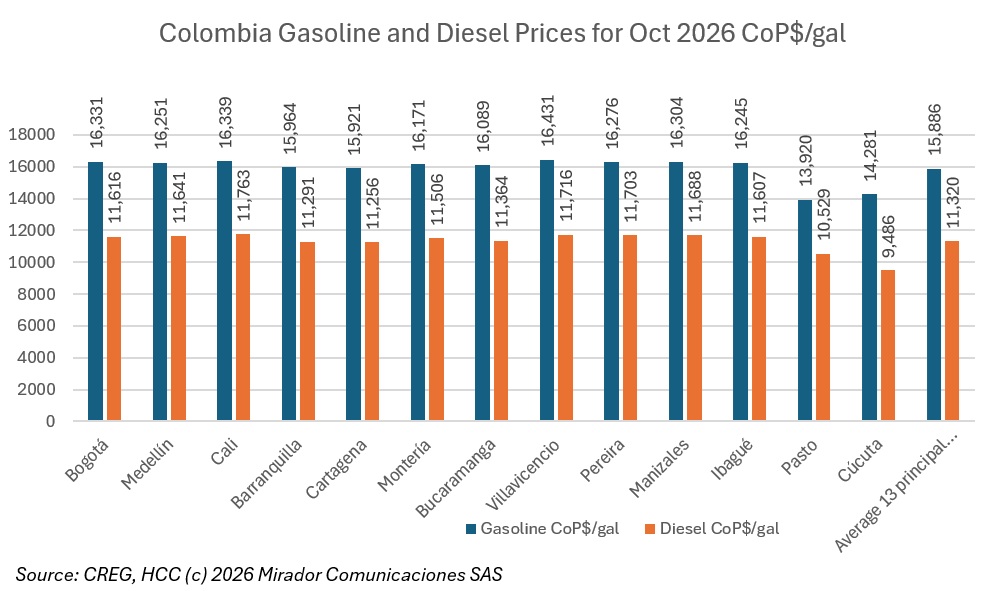
Gasoline reference prices range from CoP$13,920 per gallon in Pasto to CoP$16,431 in Villavicencio under the October fuel schedule, while diesel runs from CoP$9,486 in Cúcuta to CoP$11,763 in Cali.
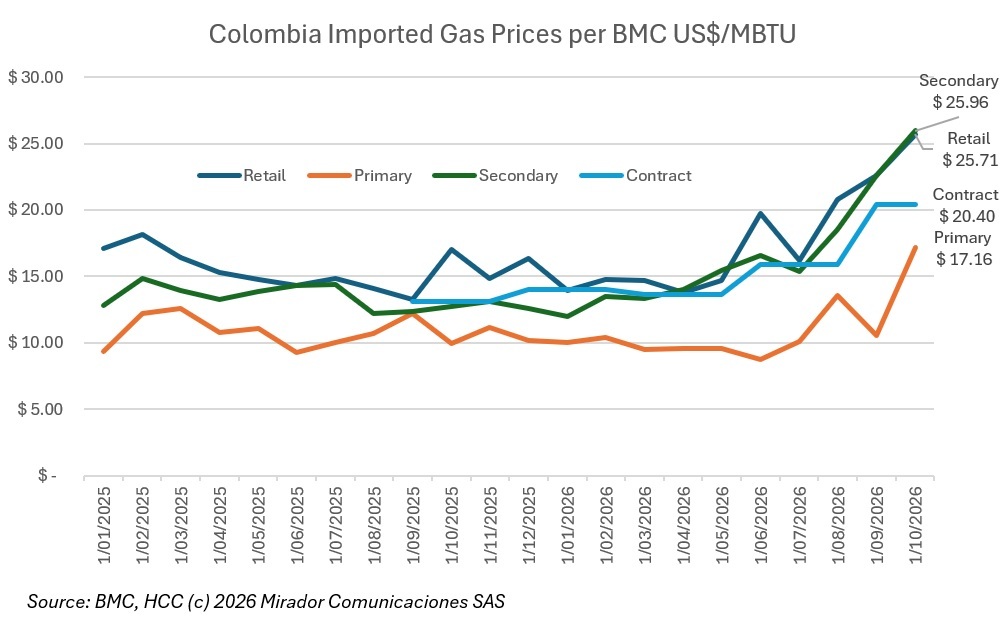
SPEC, the terminal that handles all of Colombia’s LNG imports, is running at its limit, and one energy analyst warns that without new regasification capacity the country could face a gas deficit of 124 mmcfd in March 2027.
GeoPark’s average oil and gas production rose 2.6% from 2Q26 to 27,973 boepd in 3Q26, and the company says its Venezuela expansion is advancing.
NG Energy International says its Aruchara-6 well at the Maria Conchita block is producing gas after tying into the central processing facility, and that it has spudded Encantado-1X at Sinú-9.
Cerro Matoso, the Córdoba nickel producer, says reduced gas deliveries from Canacol Energy have forced it to run at about half capacity since early August, costing it roughly 2,400 tons of nickel output.
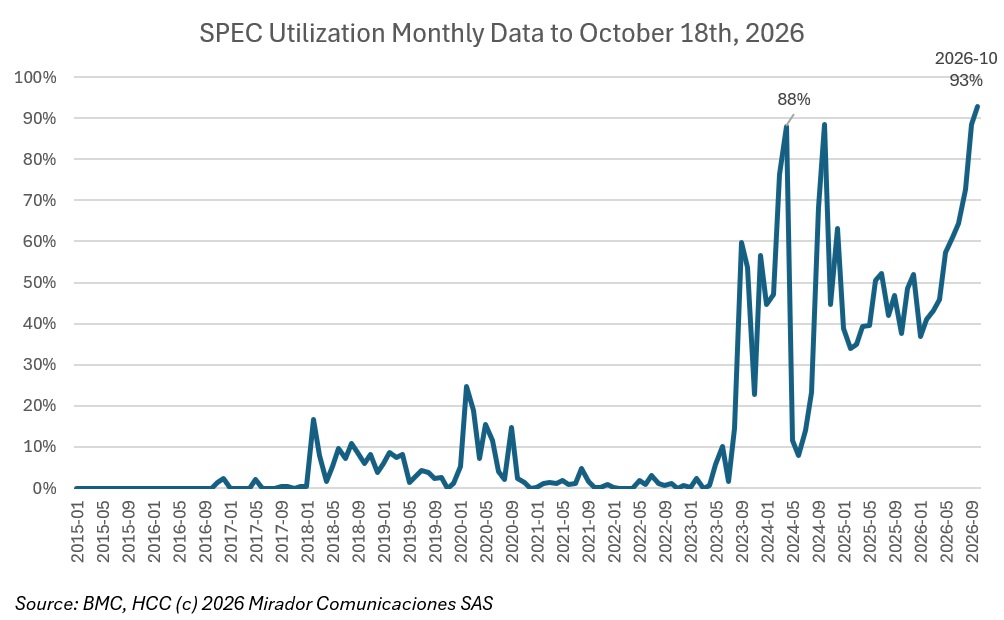
The SPEC LNG terminal in Cartagena is set to add 58 mmcfd of regasification capacity within days, taking it to 533 mmcfd. That would be the country’s only LNG import gateway running at a higher ceiling just as demand pressure builds.
Ecopetrol has declared void the offers it received to import LNG on five-year terms, saying they did not meet minimum commercial conditions, and says it will strengthen domestic gas output and accelerate Sirius.



2026, Hydrocarbons Colombia, All Rights Reserved.
