


Tuesday, October 13th, 2026
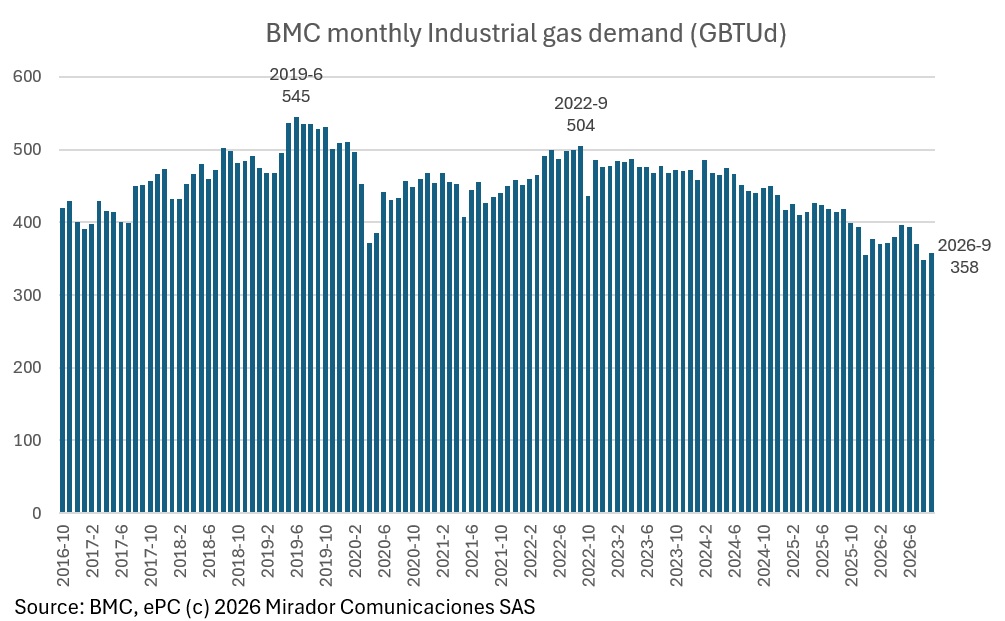
Imported gas supplied 39% of Colombia’s natural gas in September, and with a very strong El Niño looming, industrial users are looking for alternatives to secure their energy.
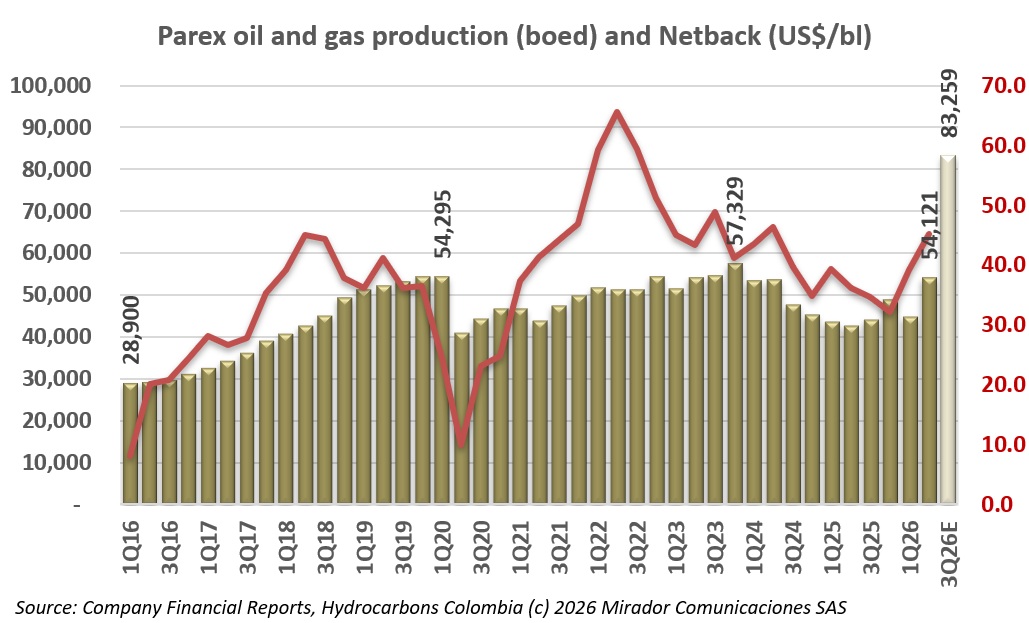
Parex Resources said preliminary 3Q26 production averaged 83,259 boe/d, with output edging up through the quarter.
Colombia’s hydrocarbons agency has begun a series of technical sessions meant to turn decades of subsurface data into new exploration opportunities.
Colgas, Ecopetrol subsidiary Hocol and the Tierralta municipal government have launched a synthetic natural gas (SNG) network in Tierralta, Córdoba, aimed at replacing firewood for household cooking. SNG is a propane-air mixture, so the town can be served without a link to the national gas transport system.
Aquiles Mercado argues in an El Heraldo column that Colombia’s energy transition should be treated as a financing problem, not mainly a moral or environmental one.
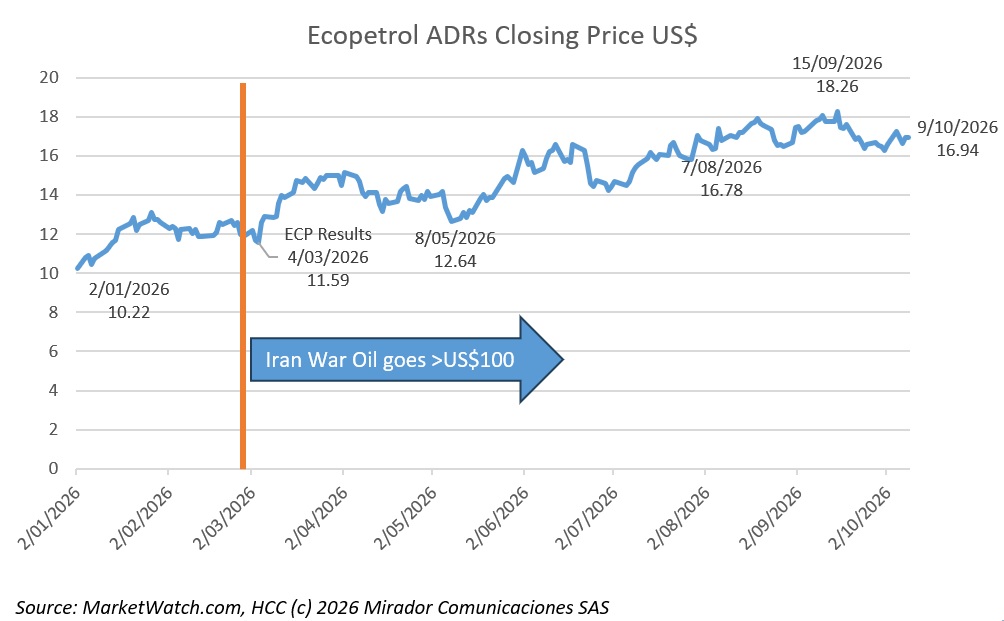
The lead graph shows the price of Ecopetrol’s ADR’s (Symbol: EC) from January 1st, up nearly 70% from the start of the year. But then oil prices are up, “thanks” to the Iran War, now a wider Middle East conflict and a favorable change in government.
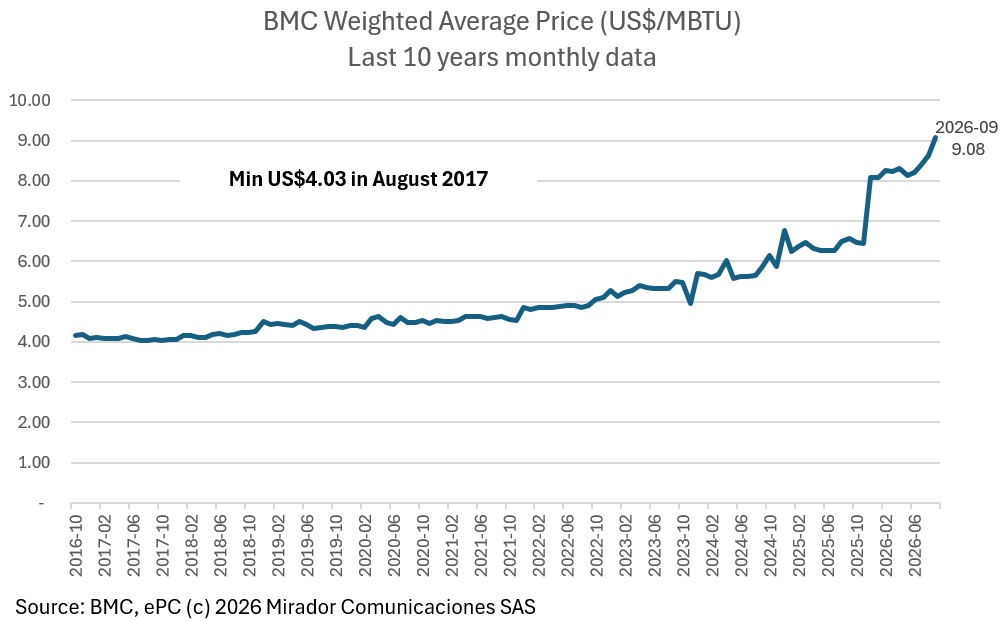
This should come as a surprise to no one: as domestic production falls, the supply mix shifts to imported gas at more than twice the price of domestic. The average inevitably has to go up.



2026, Hydrocarbons Colombia, All Rights Reserved.
