

Wednesday, September 16th, 2026
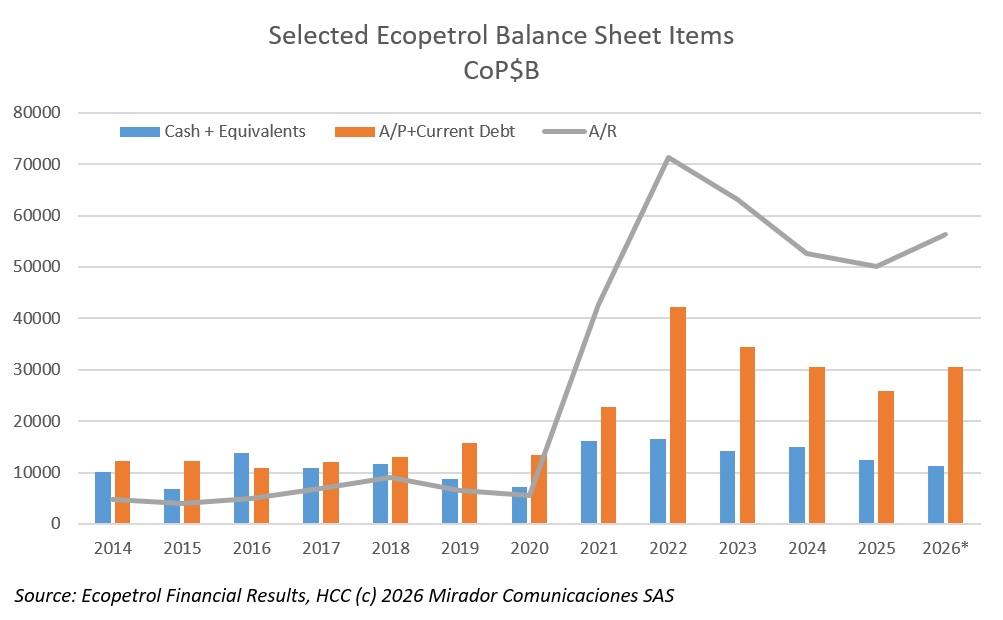
Ecopetrol’s cash position has reportedly fallen to around CoP$1.6T in recent days, down sharply from CoP$11.2T at the close of Q2 after the company paid its final dividend tranche to the government in June.

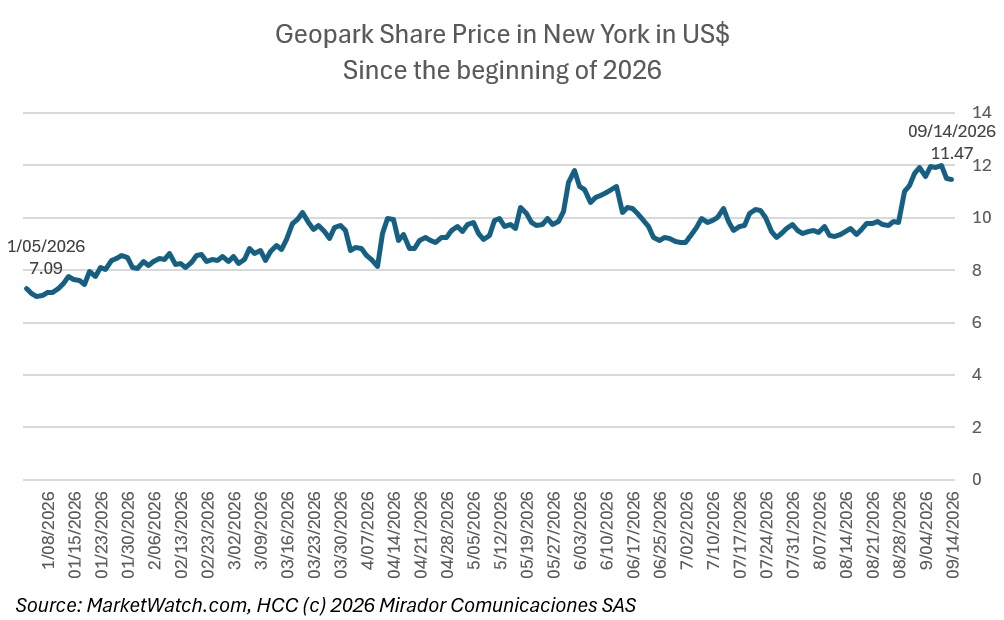
GeoPark is evaluating a dual listing that would let its shares trade in Colombia and eventually other markets, aiming to expand liquidity and access to new investors.
Valora Analitik obtained a draft decree the De la Espriella government is preparing to regulate offshore oil and gas production, covering operations Ecopetrol develops directly, agreements with Ecopetrol and partners, or agreements with the Agencia Nacional de Hidrocarburos (ANH).
Ecopetrol board chairman Luis Felipe Henao will demand interim president Juan Carlos Hurtado’s irrevocable resignation at an extraordinary board meeting.
Ariel Corzo Díaz, an Ecopetrol worker and USO union member, filed an injunction (tutela) seeking to suspend the company’s general shareholders assembly, scheduled for September 15, arguing the board slate improperly reused January 2026’s internal union vote to place César Loza in the seventh workers’-representative board seat rather than reopening nomination and voting.
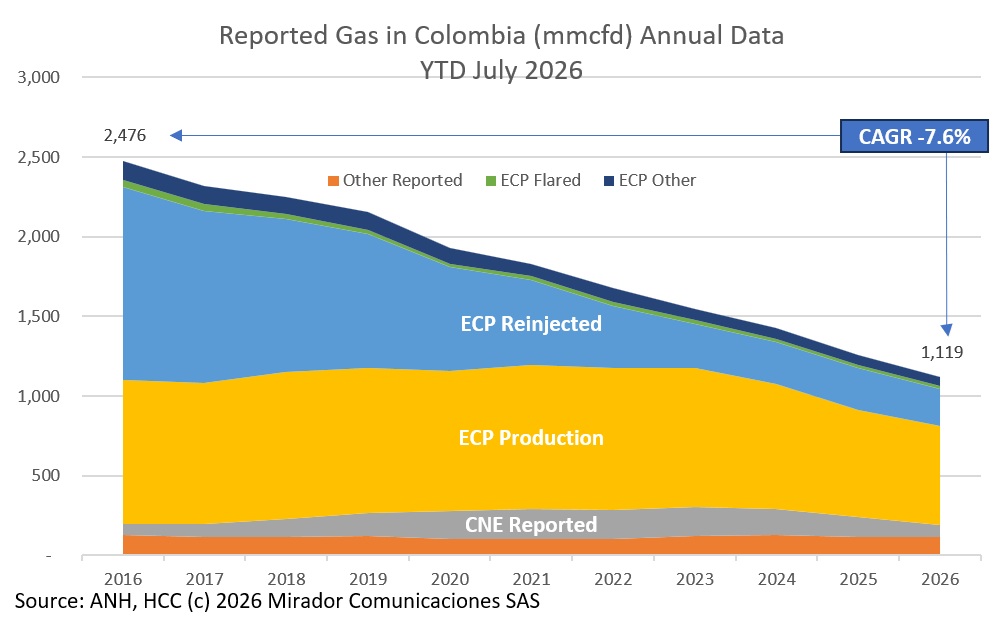
Some might hope that gas production improves since SPEC is reaching its capacity and no other LNG import facilities have come online. That’s not the case.

Enercer S.A. E.S.P. announced a natural gas service suspension Tuesday night across 11 municipalities in eastern Boyacá — Garagoa, Tenza, La Capilla, Sutatenza, Guateque, Miraflores, Zetaquira, Berbeo, Páez, San Eduardo, and Campohermoso.



2026, Hydrocarbons Colombia, All Rights Reserved.
