

Thursday, August 27th, 2026
Colombia’s electricity demand is projected to grow roughly 10% between 2026 and 2030, according to UPME estimates cited at Andeg’s 13th Energy Forum, straining both generation supply and the transmission network.

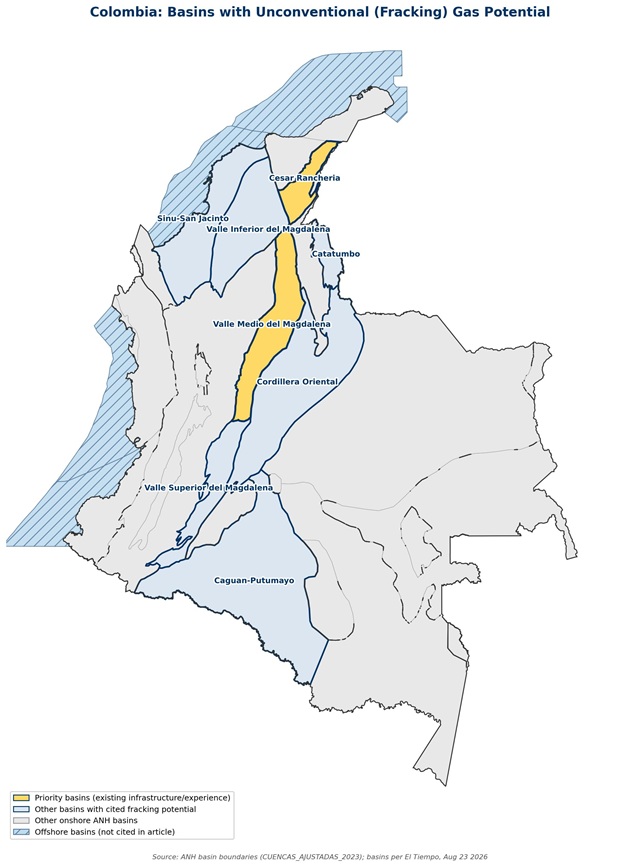
President Abelardo De la Espriella’s arrival has revived hopes of restoring Colombia’s natural gas self-sufficiency through unconventional reservoir development, with industry experts pointing to substantial potential across eight basins beyond the long-discussed Middle Magdalena Valley, following more than 15 years of regulatory and environmental debate.
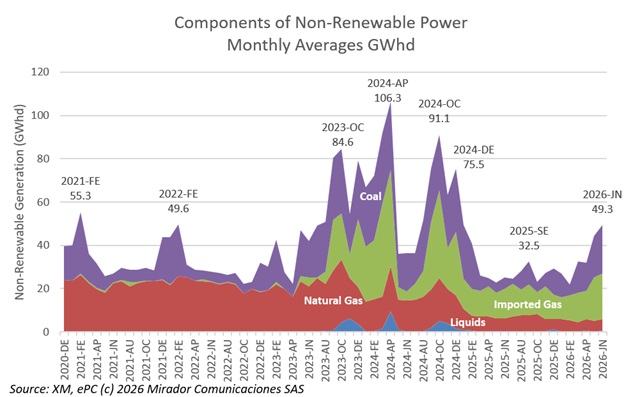
Electricity market controller XM’s interim general manager Juan Carlos Morales was direct about what backing up Colombia’s hydro-dependent grid through El Niño will require: ‘we’re going to need coal and gas, as well as liquid fuels… the entire generation chain of the system will be called upon.’
Colombia’s liquefied petroleum gas (LPG) user base grew from 59,000 to more than 372,000 between 2015 and 2025 — an increase of over 300,000 — with roughly 95% of those users belonging to strata 1 and 2.
Ecopetrol’s board, chaired by Luis Felipe Henao and backed by the De la Espriella government, approved a forensic audit into five major corruption scandals involving contracts and appointments, including the previously reported Termomorichal I/II and Gaxi cases and alleged interference by former first lady Verónica Alcocer and a contractor known as “el bachiller.”
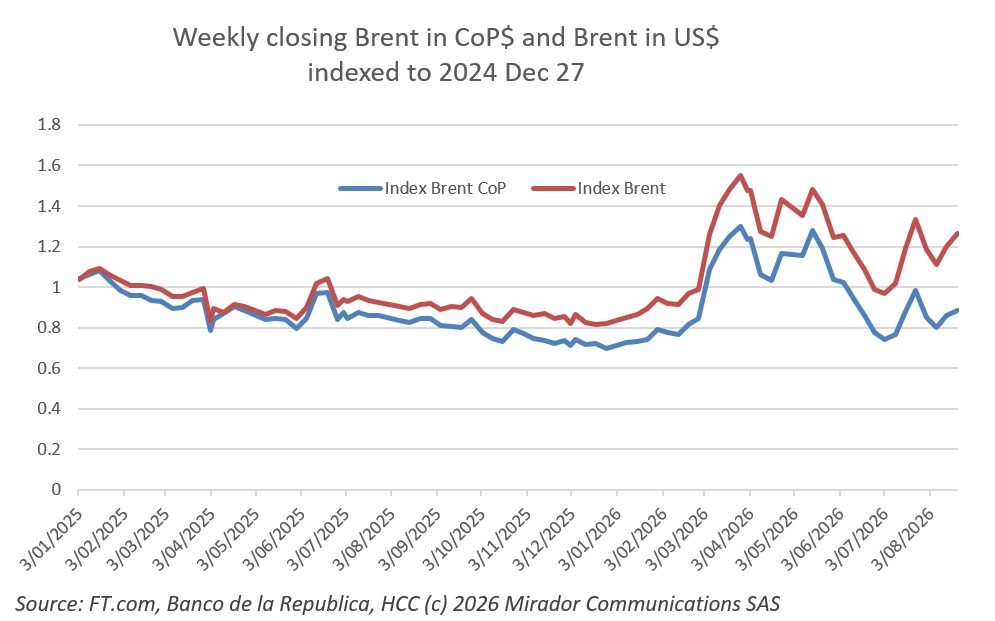
The Colombian peso closed Wednesday, August 19 at CoP$3,039 to the dollar, its strongest level since 2018, with the year-to-date decline in the exchange rate now exceeding 17.5%, roughly CoP$658 less per dollar than where the year began (~CoP$3,757).
Ecopetrol confirmed it has completed acquisition of a majority stake in Brazil’s Brava Energia, executed through subsidiary Ecopetrol Investimentos do Brasil Ltda after satisfying all closing conditions and regulatory requirements.



2026, Hydrocarbons Colombia, All Rights Reserved.
