

Colombia’s state-owned oil company Ecopetrol (NYSE: EC) and natural gas producer Canacol Energy (TSX: CNE) are advancing discussions that could lead to a potential acquisition.
Colombian households could see another hike in their gas bills by December, as the country becomes increasingly reliant on imports to secure supply, warned Luz Stella Murgas, president of the Colombian Natural Gas Association (Naturgas).
The Unión Sindical Obrera (USO), one of Colombia’s most powerful oil workers’ unions, is facing mounting internal tensions after its president, César Loza, openly suggested that Colombia should resume fracking to safeguard energy self-sufficiency.
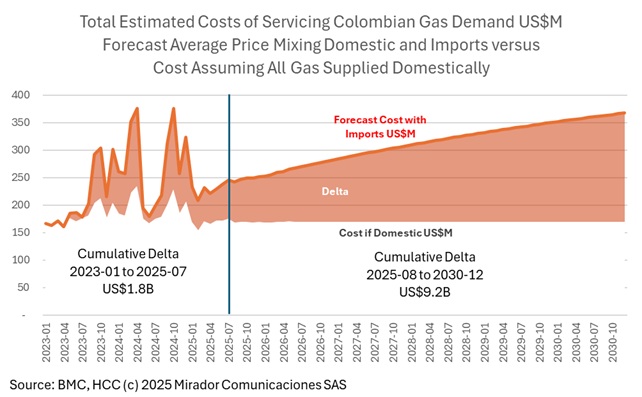
Colombia’s economy could lose CoP$11.2T over the next eight years due to rising natural gas prices and dwindling domestic supply, according to a new report from Fedesarrollo.
The Amazon presidential summit in Bogotá closed with partial agreements but without the headline demand from Indigenous communities, scientists, and civil society: a ban on fossil fuel extraction in the rainforest.
The Colombian government unveiled a draft resolution aimed at ensuring natural gas supply during the scheduled maintenance of Cartagena’s regasification plant, SPEC LNG, set for October 10–14, 2025.



2026, Hydrocarbons Colombia, All Rights Reserved.

