


Thursday, October 15th, 2026
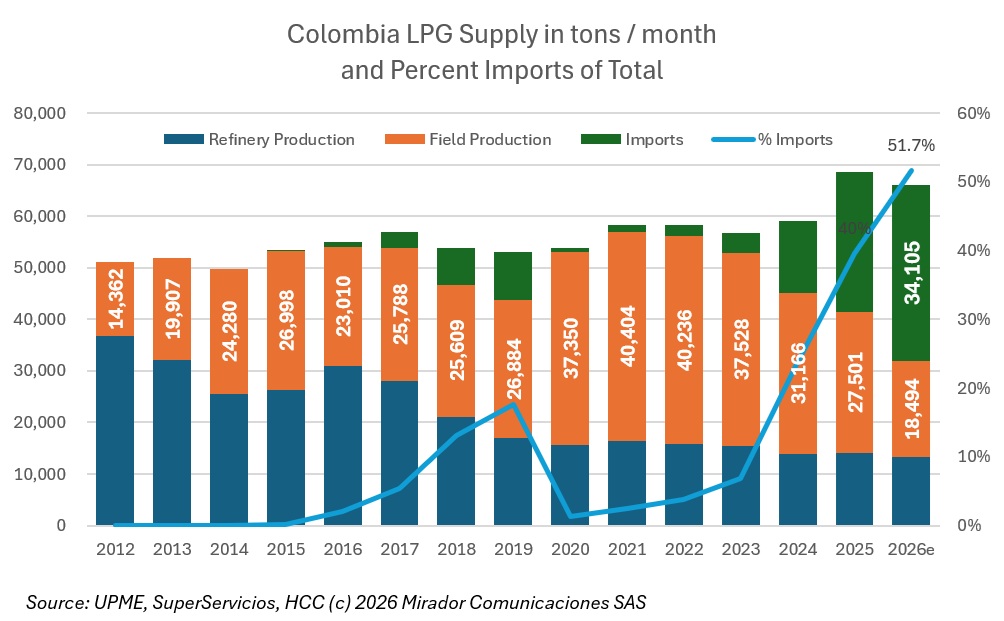
Colombia now imports more liquefied petroleum gas (LPG) than it produces, as industrial users switch away from scarce natural gas and domestic output declines.
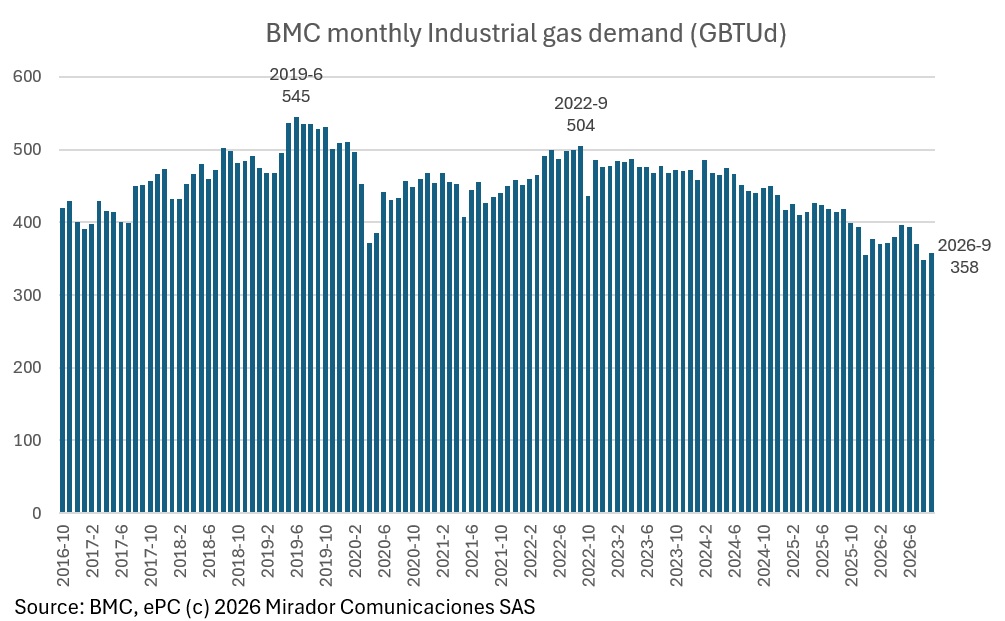
Imported gas supplied 39% of Colombia’s natural gas in September, and with a very strong El Niño looming, industrial users are looking for alternatives to secure their energy.
The floating storage unit that will supply Colombia’s Pacific regasification project has arrived in Buenaventura Bay, and large companies are reportedly weighing bids for the venture.
Ecopetrol’s board named Joaquín Gutiérrez Caballero president on Sept 24, completing a leadership overhaul in which close allies of President Abelardo de la Espriella now run the company.
Eni and Repsol are reportedly looking to sell part of their stake in La Perla, Venezuela’s largest gas field, to raise capital for a production expansion.
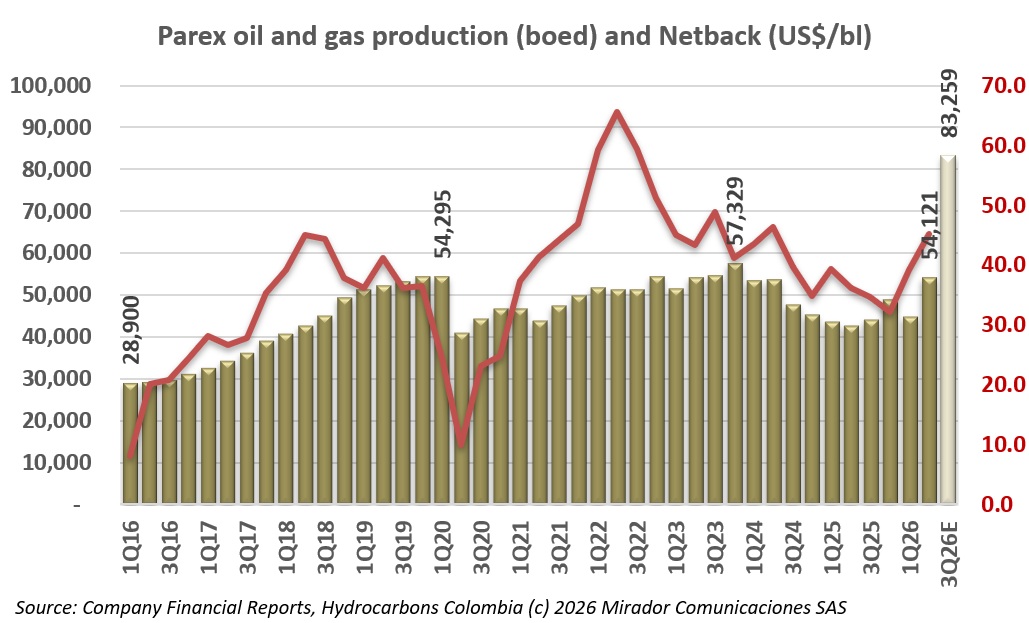
Parex Resources said preliminary 3Q26 production averaged 83,259 boe/d, with output edging up through the quarter.
Colombia’s hydrocarbons agency has begun a series of technical sessions meant to turn decades of subsurface data into new exploration opportunities.



2026, Hydrocarbons Colombia, All Rights Reserved.
