

Thursday, August 13th, 2026
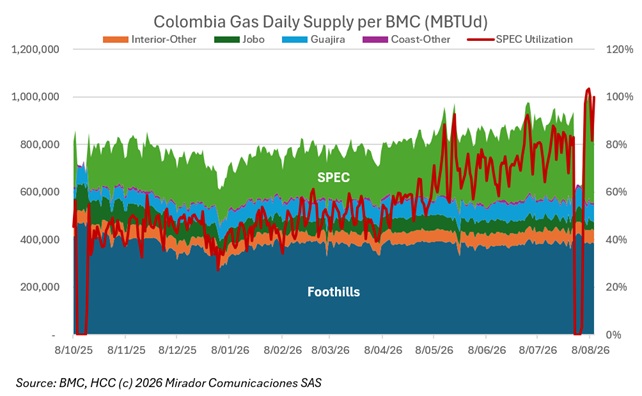
Colombia’s natural gas production fell 12.9% year-on-year in May 2026, to 1,129 million cubic feet per day (mmcfd) from 1,296 mmcfd in May 2025, with the decline attributed to Casanare, Sucre, Boyacá, and Córdoba.

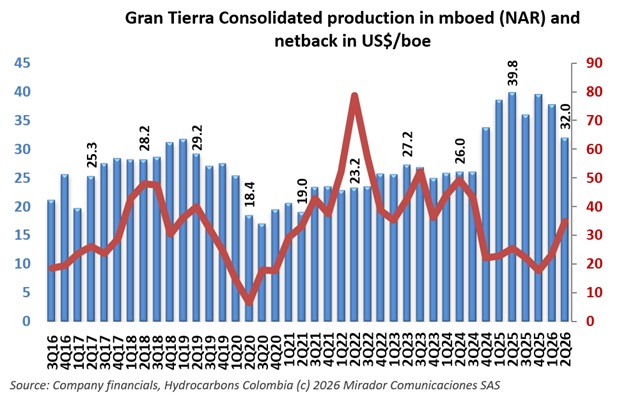
Gran Tierra reported second-quarter 2026 net income of US$25 million, a sharp swing from a US$119 million net loss in Q1, on total production of 41,501 boed and Adjusted EBITDA of US$85 million.
President Abelardo De la Espriella used his first address as president, delivered from Batallón Pichincha in Cali, to declare that recovering Ecopetrol will be an absolute priority of his administration, alongside reactivating hydrocarbons exploration and authorizing fracking under environmental standards.
Cerro Matoso, Colombia’s ferronickel producer in Córdoba, cut its operations 50% indefinitely as of August 4, after Canacol Energy continued restricting gas deliveries to below 4,000 MBTUD — less than a quarter of the contracted volume.
An extensive El Espectador retrospective, drawing on interviews with more than 10 sector figures, delivers a mixed verdict on the outgoing Petro government’s hydrocarbons record – industry groups call it negative, while the government points to democratic legitimacy for its choices.
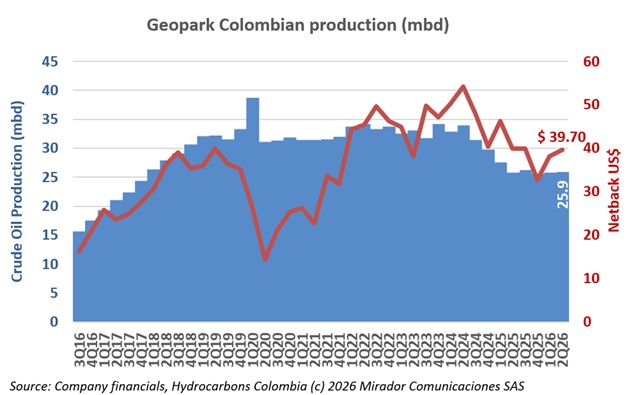
GeoPark reported second-quarter 2026 revenue of US$143.3 million, up 12% from US$128.4 million in the first quarter, on stable consolidated production of 27,271 boepd and a combined realized oil price of US$67.20/boe, up from US$60.4/boe in 1Q2026 as Brent averaged US$96.9/bbl.
Gran Tierra Energy has agreed to sell its entire Colombia and Ecuador oil business – all of its South American assets – to Établissements Maurel & Prom, a Paris-listed operator majority owned by Indonesia’s Pertamina, for total consideration of US$1.33 billion.



2026, Hydrocarbons Colombia, All Rights Reserved.
