

Thursday, October 1st, 2026
President Abelardo de la Espriella used Joaquín Gutiérrez’s swearing-in as Ecopetrol’s new president to lay out his own energy policy framing, going further than Gutiérrez’s own fracking pledge from the same ceremony.

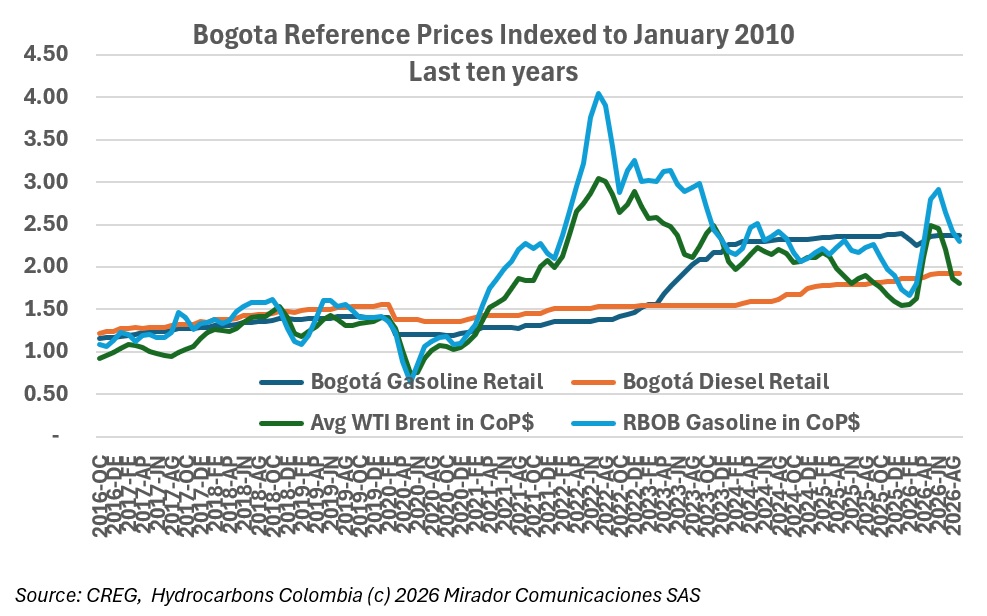
Vice Minister of Energy Armando Cuello said the government has not ruled out eventually raising diesel prices, arguing the current subsidy is unsustainable.
Colombia declared programmed natural gas rationing this week for industrial customers, requiring an explanation of both the mechanical trigger and the broader supply fragility it exposes.
Colombia’s mining and energy sector has gone from generating 36.2% of corporate income tax revenue in 2012 to just 6.3% in 2025, a collapse that ANIF and the Colombian Energy Roundtable (CREE) warn is both a fiscal and an energy-security problem.
The Colombian Association of Petroleum Engineers (Acipet) laid out a formal three-proposal package for the government at its Congress on Oil, Gas and Energy in Bucaramanga.
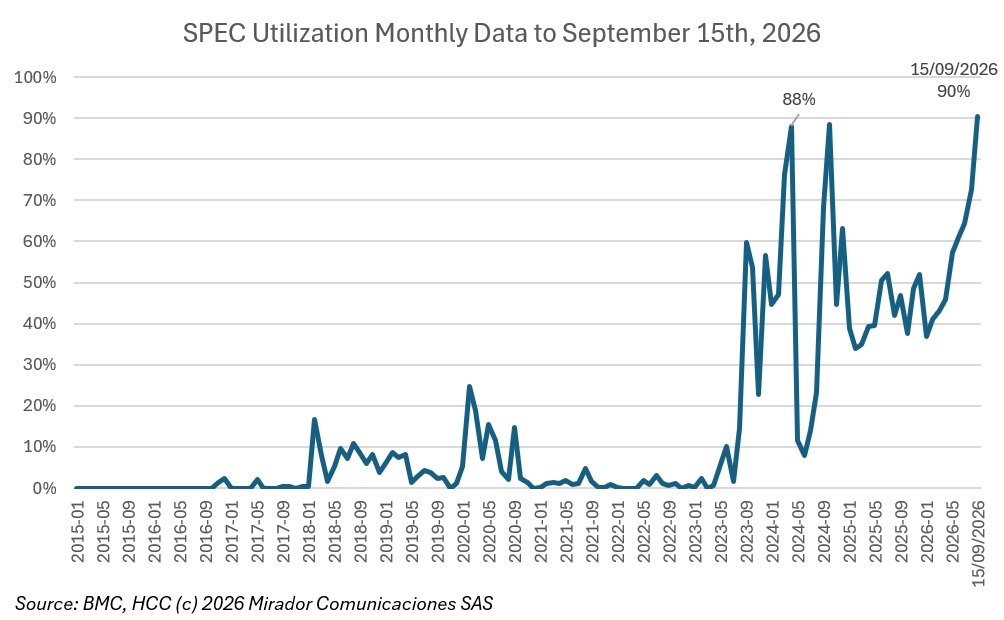
A malfunction in one of the floating regasification unit’s trains at the SPEC terminal in Cartagena forced Colombia into temporary industrial gas rationing starting September 24th, cutting the terminal’s capacity from 475 to 400 mmcfd and restricting roughly 15 GBTU/day of demand normally covered by imported gas.
Ecopetrol’s newly renewed board unanimously confirmed Joaquín Gutiérrez Caballero as president without using an external headhunter, opting instead to run the search itself following the board’s complete September 15th renewal.



2026, Hydrocarbons Colombia, All Rights Reserved.
