

Community objections on local hiring practices in Barrancabermeja have fueled several conflicts with companies recently, despite prior agreements and leading to a suspension of activities at the La Cira Infantas field. These and other stories on Corporate Social Responsibility (CSR) in our periodic summary.
A sharp drop in attendance and calls of protest were two of the main takeaways from Ecopetrol’s (NYSE:EC) annual shareholder meeting held last week. Minority shareholders protest as the board of directors vote to not pay dividends this year. The NOC says it needs a US$50/barrel fuel price to reactivate shuttered fields.
The consequences of the fall in oil prices look more severe with each passing month, as producing municipalities have suffered a perfect storm of corruption, poor management, regulatory changes, dwindling royalties and high resident expectations.
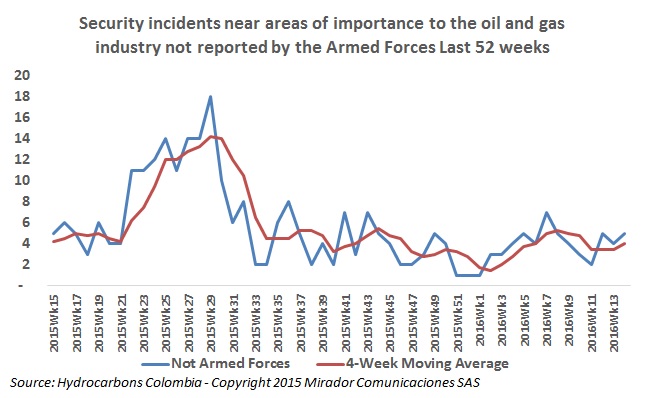
With the announcement of formal peace talks between the ELN and the Colombian government, we expect to see a qualitative shift in security results starting next week. So this graph will be our new ‘benchmark’.
As one of his last actions at his post, the Attorney General Eduardo Montealegre has called on judges in Bogotá’s Paloquemao Judicial Complex to hold an audience to bring charges against the the ELN leaders for systematic attacks on oil infrastructure and the resulting environmental damage.
The legal representative of 20% of Pacific E&P (TSX:PRE) investors, Jaime Granados, promised legal action in Colombia if company management enacted a debt for share swap which could mean a total loss of value for the company’s shareholders.



2026, Hydrocarbons Colombia, All Rights Reserved.

