

Congressional leaders called in the Minister of Mines and Energy Tomás Gonzalez and delegates from the Energy and Gas Regulation Commission (CREG) to defend their energy policies considering the uncertainty. The politicians seemed unconvinced by the official response.
Colombia’s Caribbean region has been identified as the territory where royalty investments have been the most mismanaged, while local departments reflect on royalty investments over the three year span of the General Royalty System (SGR). These and other royalty-related stories in our periodic summary.
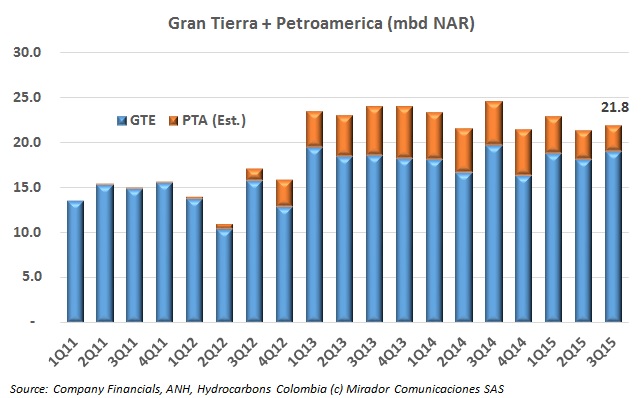
Gran Tierra Energy (TSX:GTE) says that it has entered into an agreement to acquire Petroamerica (TSX Venture:PTA), its first major move since new management took charge earlier this year, and a bid to consolidate its operation in Putumayo.
During a hearing to release the results of a joint sustainable project between the industry and community in Aguazul, Casanare the Vice Minister of the Interior Carlos Ferro Solanilla praised the efforts and results of both the community and hydrocarbons sector.
The oil industry offered its support for road work in Casanare, meanwhile the community in Puerto Gaitán calls for more social contributions and hiring from a local operator. These and other stories on Corporate Social Responsibility (CSR) in our periodic summary.
The National Planning Department highlighted the importance of royalty resources for the post-conflict era, and has outlined changes being made to make their use more efficient.



2026, Hydrocarbons Colombia, All Rights Reserved.

