


With all quarterly-reporting public companies now in our database, we can update our trend graphs for netback and average realized oil prices.
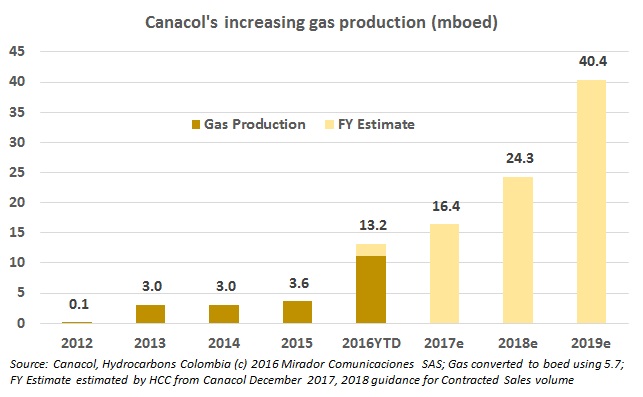
Canacol (TSX:CNE) announced significant increases in its contracted sales starting in December 2017 and December 2018, facilitated by new infrastructure.
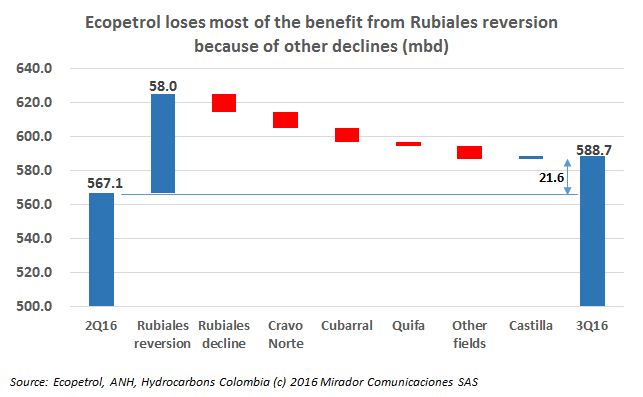
We thought Ecopetrol (NYSE:EC) should have had a better 3Q16. This was the first full quarter of the reversion of Rubiales field and the NOC picked up the production that Pacific (TSX:PEN) used to get. Production did go up but not by much.
Ecopetrol (NYSE:EC) defended its contribution and legacy in Huila after entering operation in the region in November 1994, in what appears to be an attempt to counter criticism from the USO workers union over the sale of smaller fields.
Colombian brand Terpel will benefit from an agreement between Chile’s Copec and ExxonMobil. Terpel’s revenues are 66% of Copec’s total production.
As of this writing on Thursday, November 24 Farc and government representatives were set to sign the revised peace agreement in Bogotá, and submit the document to congress for approval. The ‘no’ opposition is demanding another referendum on the new agreement.



2026, Hydrocarbons Colombia, All Rights Reserved.

